








Popular searches:
EB-S1
S90
MNK6
EB-S1E
Planning a Longer Ride with a LUYUAN Electric Scooter


Aug 19,2026
A longer electric scooter trip requires more than checking the battery percentage before leaving. Route distance, road conditions, weather, charging opportunities, riding speed, and vehicle condition can all influence how comfortably a rider completes the journey.
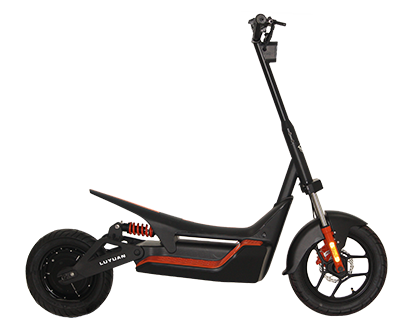
For anyone using a long-distance electric scooter, planning ahead can reduce range anxiety and make the trip more predictable. The S70 Pro offers an interesting example because its configuration combines substantial battery capacity with features designed for extended riding, giving riders a practical starting point for thinking about longer journeys.

Start With the Route, Not the Battery
Before leaving, calculate the approximate distance of the complete journey rather than focusing only on the distance to the destination. If the return trip is part of the plan, include it from the beginning.
A route with steep climbs, frequent stops, or rough surfaces can consume more energy than a similar-length trip on smooth, flat roads. Traffic conditions may also affect energy use because repeated acceleration and braking require additional power.
For longer journeys, riders should identify alternative routes and potential charging locations before departure. A few minutes of planning can be more useful than relying entirely on the range number shown in promotional material.
Leave a Practical Energy Reserve
It is risky to plan a long trip around the maximum possible range. Published range figures are usually based on specific testing conditions, while real-world performance can vary.
A sensible trip plan should therefore leave some battery capacity in reserve. Hills, wind, low temperatures, cargo, rider weight, and riding speed can all change the distance available from a charge.
Why the S70 Pro Fits Longer-Ride Planning
Rather than focusing only on the S70 Pro's headline specifications, it can be useful to look at how its configuration supports trip planning.
The S70 Pro-GT has a 76 V 27 Ah LFP battery, a 2,000 W rated motor, a listed maximum speed of 70 km/h, and a 14° climbing capacity. Its listed charging time is 5–6 hours with a 6 A charger.
These specifications make battery capacity, performance, and charging time relevant considerations for riders who regularly plan longer routes. The model is also available in other configurations, so buyers should confirm the exact version before comparing specifications.
Choose Your Riding Speed Carefully
Speed can have a major influence on energy consumption. Riding continuously at a higher speed generally requires more energy than maintaining a moderate and consistent pace.
This does not mean that every long-distance trip needs to be slow. Instead, riders should choose a speed appropriate for the road, traffic, and local regulations while avoiding unnecessary acceleration.
Smooth riding can also make the trip more comfortable. Instead of repeatedly accelerating hard and braking sharply, maintaining a steady rhythm where conditions permit can help reduce unnecessary energy use.
Think About Hills Before You Leave
A long route is not necessarily an easy route. A relatively short journey with repeated steep climbs can demand more from the motor than a considerably longer trip across flat roads.
When planning a trip, riders can check the route profile in advance. If a steep section cannot be avoided, leaving additional battery reserve is a sensible precaution.
Check the Scooter Before a Long Trip
A pre-ride inspection becomes more important as the planned distance increases. A small issue that might be manageable during a short commute can become inconvenient when the rider is far from home.
We recommend checking battery level, brakes, tire pressure, lights, dashboard, and fasteners before riding. We also advise confirming that there is no liquid leakage or damaged wiring.
These checks do not take long. Tire pressure is particularly worth reviewing because incorrect pressure can affect both handling and energy efficiency.
Consider the Rider's Comfort
Range is only one part of a successful long-distance journey. If the rider becomes uncomfortable after a short period, a scooter with substantial battery capacity may still be unsuitable for the intended trip.
The S70 Pro includes an ergonomic comfort seat and an oversized footboard. We position the seat around rider support and the footboard around additional space and freedom of movement.
These design elements provide a different angle for evaluating the model. Instead of simply asking how far the scooter can travel, buyers can also consider whether its riding environment suits the duration of their typical journeys.
Prepare for Changing Weather
Weather can influence both range and riding conditions. Cold temperatures can affect battery performance, while rain can change braking, traction, and visibility.
In 2026, LUYUAN reported testing the S70 Pro under high-altitude, extreme-cold, and high-ultraviolet conditions on the Qinghai-Tibet Plateau. We reported a 93 km single-charge result at a constant 35 km/h during that test, while noting that the test involved specific extreme conditions.
This result should not be treated as a universal real-world range figure. Instead, it demonstrates why environmental conditions should be considered when planning longer rides.
Plan Charging Around the Journey
Charging strategy matters when the planned distance exceeds what the rider can comfortably cover on one charge. Before leaving, identify compatible charging opportunities along the route or at the destination.
The S70 Pro-GT lists a 5–6 hour charging time with a 6 A charger. This means riders should consider charging as part of the overall schedule rather than assuming a quick stop will always be sufficient.
For longer journeys, knowing where the scooter can be safely parked and charged can make the itinerary much more practical.
Use the Scooter's Features Sensibly
Modern electric scooters can include several electronic and control features designed to support different riding conditions. The broader LUYUAN technology platform includes driving control functions such as traction control, hill descent control, and hill-start assistance.
Riders should understand which functions are available on their specific model and configuration before starting a long journey. These systems are intended to support control and stability, but they do not replace safe riding practices or appropriate speed.
Think Like a Long-Distance Rider
For someone comparing a long-distance electric scooter, the most useful question is not simply “How many kilometers can it go?” A better question is whether the vehicle, route, riding style, weather, charging plan, and rider all work together.
For businesses researching electric scooter manufacturers in China, the same principle applies. Product evaluation should include the complete specification, testing information, manufacturing capabilities, and support resources rather than focusing on one advertised number.
The S70 Pro illustrates this broader approach. Its multiple configurations, substantial battery option, liquid-cooled motor, suspension system, and comfort-oriented design give buyers several factors to evaluate for longer-distance use.
Ultimately, successful long-distance riding comes down to preparation. Check the scooter, understand the route, keep a realistic energy reserve, ride smoothly, monitor weather conditions, and know where charging is available. With those habits in place, a capable long-distance electric scooter can become a practical option for journeys that extend well beyond the ordinary daily commute.




Press: media@luyuan.cn
Telephone: +86-579-82272946
Business: market@luyuan.cn
Telephone: +86-579-82272528
Service: service@luyuangroup.com
Select your country or region
Global
Asia

中文