








Popular searches:
EB-S1
S90
MNK6
EB-S1E
nside LUYUAN: What an Electric Scooter Factory Does


Aug 09,2026
When people see an electric scooter, they usually notice its design, speed, battery, and riding features. Behind those visible elements is a much larger manufacturing process. An electric scooter factory has to coordinate product development, component production, assembly, testing, quality control, and supply chain management before a vehicle reaches the market.
For international buyers, understanding this process also provides a clearer view of what “Made in China” means in the electric two-wheeler industry. China has developed a broad manufacturing ecosystem for electric mobility, allowing manufacturers to combine engineering expertise, specialized production, and large-scale supply capabilities.

What Happens Inside an Electric Scooter Factory?
An electric scooter factory does much more than assemble finished components. Production begins with product development and engineering, where designers and engineers determine the vehicle's structure, electrical architecture, motor system, battery configuration, and other specifications.
Once a design is established, manufacturing teams coordinate different production stages. These can include frame fabrication, motor production, electrical component assembly, painting, final vehicle assembly, inspection, and packaging. Each stage needs to work together because a problem in one area can affect the finished scooter.
This integration is especially important for export-oriented manufacturers. Products may need to meet different technical requirements depending on the destination market, so manufacturing systems must support consistent production while allowing different configurations.
Made in China: More Than Final Assembly
The phrase “Made in China” is sometimes associated mainly with large-scale production. In the electric two-wheeler sector, however, China's manufacturing advantage also comes from the depth of its industrial supply chain.
Electric scooters require motors, batteries, controllers, frames, tires, braking components, displays, wiring, and numerous smaller parts. Concentrated manufacturing networks make it easier for companies to source specialized components and coordinate production at scale.
For Chinese electric scooter manufacturers, this ecosystem can support faster product development and broader model selection. It also gives manufacturers access to engineering and production experience accumulated through years of serving both domestic and international markets.
How LUYUAN Uses Intelligent Manufacturing
LUYUAN provides an example of how a major Chinese electric two-wheeler manufacturer combines production scale with intelligent manufacturing. We have four intelligent manufacturing bases and a planned annual production capacity of 10 million units. Our manufacturing network includes bases in Jinhua, Zhejiang; Shandong; Guangxi; and Chongqing.
Our Jinhua base is described as having 11 vehicle assembly lines. Our company also highlights automated processes for motor winding, assembly, inspection, and frame production, showing how automation can be integrated into different manufacturing stages rather than being limited to final assembly.
For buyers, these capabilities matter because manufacturing scale needs to be supported by repeatable processes. Consistent production can help manufacturers maintain product specifications across larger volumes while managing different models and market requirements.
From Components to a Finished Scooter
The manufacturing journey can be viewed as a series of connected stages. Frame production creates the structural foundation, while motor and electrical systems provide propulsion. Battery systems supply energy, and braking, suspension, tires, lighting, and controls complete the vehicle.
Assembly brings these systems together. Workers and automated equipment install components according to defined procedures, after which inspection teams check key functions and construction quality.
Testing is another important stage. A scooter intended for export needs to perform according to its specified design, so manufacturers may evaluate electrical systems, braking, lighting, battery-related functions, and other components before products are shipped.
Why Testing Matters in Chinese Electric Scooter Manufacturing
A sophisticated production line is only useful when it is supported by effective quality control. Testing helps identify manufacturing problems before vehicles leave the factory, reducing the possibility that defects will reach distributors or riders.
LUYUAN's manufacturing system includes a CNAS-accredited laboratory covering inspection and testing areas for electric two-wheelers. We specifically identifies areas including chassis simulation and lithium battery safety testing.
This illustrates an important aspect of modern Chinese electric scooter manufacturers. Manufacturing competitiveness increasingly depends on engineering validation and quality systems alongside production volume.
For international buyers, factory testing can therefore be an important part of supplier evaluation. Production capacity tells buyers how much a manufacturer can make, while testing capabilities provide insight into how products are evaluated before delivery.
Technology Development Happens Alongside Production
Modern electric scooters also require continuous technology development. Motors, batteries, control systems, and connected functions directly influence vehicle performance and user experience.
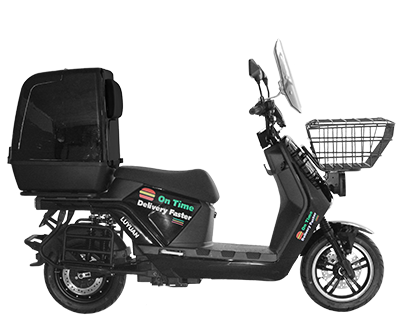
We identify liquid-cooled motors, digital batteries, driving control, reliable performance, and smart experiences as key technology areas. Our website also presents a product portfolio covering performance, standard, and delivery electric scooters, as well as electric bikes and electric kick scooters.
This connection between R&D and manufacturing is important. A factory needs to translate engineering designs into repeatable products. As technologies change, production processes may also need to evolve.
Supporting Global Buyers
For an international buyer, factory capability is closely connected to supply reliability. Export customers may require stable production, technical documentation, after-sales support, and products adapted to different market conditions.
Our company's current global strategy also emphasizes moving from product export toward broader capability and ecosystem cooperation. At the 2026 Global Partner Conference, our company described visits to headquarters as including R&D facilities, smart manufacturing lines, and global supply chain.
What Factory Capability Means for Buyers
When evaluating an electric scooter manufacturer, buyers should look beyond factory size. A more complete assessment includes manufacturing locations, production processes, testing systems, technology development, product range, and international support.
A factory with these capabilities can potentially offer greater consistency and flexibility than a supplier focused only on final assembly. Buyers should still conduct their own due diligence, including reviewing certifications, product specifications, quality requirements, production schedules, and commercial terms.
For distributors and importers, this approach is particularly useful when comparing Chinese electric scooter manufacturers. The goal is to understand not only what a supplier sells, but also how its manufacturing system supports the products.
The Bigger Picture Behind Made in China
An electric scooter carrying a “Made in China” label represents the work of many interconnected processes. Engineering, component manufacturing, intelligent production, testing, quality management, and supply chain coordination all contribute to the finished vehicle.
LUYUAN demonstrates how an established electric scooter factory can combine large-scale production with technology development and international distribution. Our manufacturing infrastructure is part of a broader system designed to support electric two-wheelers across different applications and markets.
For global buyers, looking inside the factory provides useful context when evaluating a supplier. Instead of judging a scooter only by its appearance or headline specifications, they can consider the manufacturing capabilities behind it. That broader perspective is essential for understanding the value and potential of modern Made-in-China electric mobility.




Press: media@luyuan.cn
Telephone: +86-579-82272946
Business: market@luyuan.cn
Telephone: +86-579-82272528
Service: service@luyuangroup.com
Select your country or region
Global
Asia
中文