








Popular searches:
EB-S1
S90
MNK6
EB-S1E
Long-Range Performance: Evaluating S95 for Commercial Use


Jul 30,2026
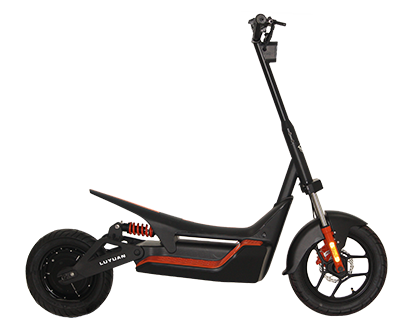
Commercial suitability begins with the duty cycle, not the maximum specification. We map distance, speed limits, gradients, payload, stops, weather, operating hours, charging access, rider skill, maintenance, and required availability before evaluating the LUYUAN electric scooter S95 for a route or business program.
A high performance electric motorcycle can offer valuable route coverage, yet high speed and long test range create responsibilities. Licensing, registration, insurance, protective equipment, training, braking, tires, parking, and local road access must be confirmed. The operating policy may remain below the vehicle's maximum capability.
The S95 Pro Max test block—not a general fleet promise—is where our model-specific information places 80 km/h, 150 km of range, and 30-degree climbing. It states that actual results may vary with vehicle configuration. We keep the model and qualification attached to every use of these figures.
Business value depends on repeatability. The vehicle must complete the assigned route with a conservative energy reserve, support a realistic replenishment window, remain comfortable and controllable for the rider, and have service available when a component or warning removes it from operation.

Range and Speed Must Match the Duty Cycle
The high performance electric motorcycle label should be translated into legal and usable performance. A fleet can compare route travel time, stop time, loading, access control, parking, and handover. In many operations, workflow and dwell time limit productivity more than maximum speed, making predictable response more important than a peak number.
The 150 km figure is a highest-configuration test result, not a dispatch limit. Real range depends on speed, acceleration, payload, gradients, wind, temperature, tires, battery condition, stops, surface, and auxiliary use. Buyers should establish a local reserve from repeated trials with the exact ordered vehicle.
Climbing also needs context: gradient definition, length, surface, approach, load, battery state, temperature, traction, and descent plan. A 30-degree headline cannot authorize every hill. Route validation must include braking, tire contact, thermal behavior, and enough remaining energy for the return journey.
A LUYUAN electric scooter S95 pilot records starting and ending charge, distance, time, speed profile, payload, riders, gradients, temperature, wind, warnings, braking, and downtime. Several repetitions reveal variation. Managers can then assign vehicles to route classes rather than assuming one demonstration establishes universal commercial capability.
Battery and Protection Shape Operating Confidence
As an electric scooter manufacturer, we offer a 72 V 45 Ah NCM battery in the highlighted S95 configuration, together with several other motor and battery options across the model range. We also lists multiple motor and battery options in the detailed specification. The buyer must name the chosen trim and components because product-family results cannot define every version.
For the listed lithium battery, we state up to 3,000 charge cycles and discharge efficiency above 90 percent from -20 to 55 degrees Celsius for its lithium-battery feature. We retain the up-to and temperature qualifiers and avoid turning them into guaranteed service life, range, or performance for every operating pattern.
Our battery technology incorporates V0 flame-retardant protection, IPX7 waterproof protection, an intelligent BMS, and smart-device communication capabilities. Buyers should confirm the rated component scope, test evidence, exact installed pack, local certification, maintenance, warning actions, and warranty rather than extending one component rating to the whole vehicle.
Reliable battery operation depends on approved charging, electrical capacity, inspection, ventilation, parking, emergency procedures, software, and trained response. A long-range pack does not remove the need for a reserve, rotation plan, or spare strategy. The business case must account for downtime when any energy-system component needs attention.
Charging Strategy Must Be Confirmed Separately
For the LUYUAN S95, we publish speed, range, climbing, battery, and motor information in the performance and specification sections, but we do not state a charging time for the evaluated configuration. We therefore do not import five-to-six-hour data from another model or describe S95 as fast-charging.
A buyer should request charger model, input requirements, output, approved battery pairing, expected time under stated conditions, connector, plug, certification, thermal limits, storage, warranty, and spare availability. Facility planning then checks circuit capacity, simultaneous charging, ventilation, inspection, security, and emergency response.
A supplier should support a configuration-controlled charging statement and test. The pilot can record starting state, ambient condition, time, energy delivered, interruptions, warnings, connector temperature, and final state. This evidence shows whether the available parking window can support the route schedule.
If charging takes longer than the operating window, the solution may be another schedule, additional vehicles, a different approved configuration, or different route allocation. Commercial operators should not address this gap by using undocumented chargers. Energy replenishment is a system constraint that must be designed before scale-up.
The S95 offers compelling official highest-configuration figures for commercial evaluation, but performance becomes useful only when legal speed, conservative range, load, climbing, battery, charging, rider management, maintenance, and service fit one duty cycle. No single headline establishes fleet readiness.
For this decision, we favor piloting the exact S95 configuration and obtaining a written charging specification from the electric scooter manufacturer. The LUYUAN model data we publish creates a strong evidence base, while measured local routes and a verified energy plan should determine whether the vehicle can deliver repeatable commercial value.




Press: media@luyuan.cn
Telephone: +86-579-82272946
Business: market@luyuan.cn
Telephone: +86-579-82272528
Service: service@luyuangroup.com
Select your country or region
Global
Asia

中文