








Popular searches:
EB-S1
S90
MNK6
EB-S1E
Liquid-Cooled or Air-Cooled? A Decision Guide for Buyers


Jul 26,2026
Cooling architecture should follow the duty cycle. Before choosing a liquid cooled motor, we map trip duration, gradients, payload, repeated acceleration, ambient heat, moisture, service access, and required performance late in the route. A component label is useful only when it addresses these operating risks.
Air-cooled designs generally depend more on surrounding air and exposed surfaces, while active liquid circulation creates a managed path for heat removal. The right choice cannot be proven by a category name alone. Power, packaging, cost, protection, maintenance, and vehicle application remain part of the decision.
An electric motor liquid cooling system can be attractive when long loads and heat accumulation threaten consistency. Our liquid-cooled motor delivers coolant-based temperature reduction of up to 38 degrees Celsius, efficiency exceeding 92 percent, and IPX8-rated protection for applicable products.
We have not conducted a model-matched comparison between air-cooled and liquid-cooled motors under identical power, vehicle mass, route, and weather conditions. Therefore, we do not claim a universal quantitative advantage over every air-cooled motor. Instead, this decision guide is based on documented engineering principles and practical buyer validation.

Map Heat and Moisture Exposure
From a buyer's perspective, electric motor liquid cooling system becomes relevant when a route holds the motor under load for long periods. Long gradients, heavy cargo, high cruising speed, frequent launches, hot weather, and limited recovery time can raise thermal demand. Buyers should describe these conditions before reviewing motor claims.
Moisture creates a different risk. Rain, road spray, washing, humidity, and storage can encourage corrosion if protection is inadequate. The technology overview identifies high-temperature demagnetization and moisture-induced rust as chronic concerns, showing why cooling and water resistance should be evaluated separately and then together.
Buyers should request a liquid-cooled motor by specifying the exact series and product configuration. We would ask for rated and peak power, efficiency evidence, protection rating, coolant and sealing information, controller pairing, inspection requirements, warranty, and the model documents that connect the technology claim to the supplied vehicle.
The duty-cycle record can include route length, load, gradient, speed, ambient temperature, wet exposure, warnings, and performance at the beginning and end. This evidence tells buyers whether thermal or moisture risk is material enough to justify a more specialized architecture and support plan.
Match the Risk to a Cooling Architecture
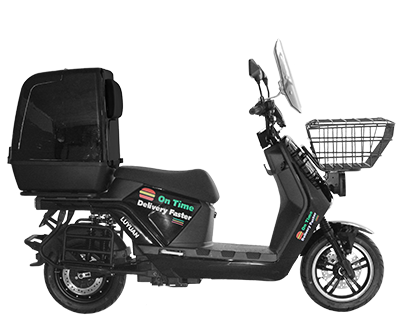
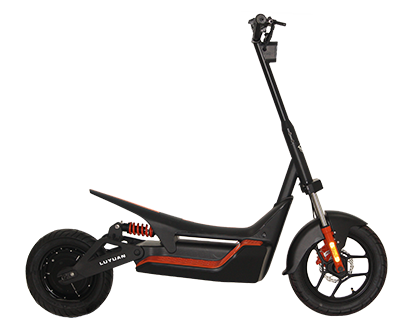
The LUYUAN electric scooter S95 serves as an example within the product family, but its specifications should not be generalized to every liquid-cooled model. For S95 Pro Max, the highest configuration is the source of the 80 km/h, 150 km, and 30-degree figures; each delivered configuration may perform differently.
Active circulation offers a clear engineering path for removing heat from critical areas. It can support stable operation under sustained demand, while sealing addresses water exposure. The benefit is strongest when the route creates those stresses and the installed motor, controller, battery, and vehicle are designed for the same duty.
Our liquid-cooled technology achieves motor efficiency above 92 percent and reduces operating temperature by up to 38 degrees Celsius. However, we do not interpret these component-level results as a universal increase in riding range or identical real-world performance. Speed, load, battery condition, tire selection, weather, and route all continue to influence overall vehicle performance.
Air cooling may remain adequate for lighter or shorter use where heat dissipates between loads. Buyers should compare evidence, complexity, maintenance, service competence, and total vehicle fit. The goal is not to purchase the most advanced label; it is to control the operating risk at a supportable cost.
Verify Configuration, Evidence and Warranty
One priority of our motor portfolio is to present several liquid-cooled motor concepts for different applications. Buyers should identify the exact variant rather than treating the family as interchangeable. Hub, dual-chamber, mid-drive, and salient-pole descriptions carry different claims and intended product categories within their respective applications.
The LUYUAN S95 is available with multiple motor and battery configurations.Headline performance belongs to the highest S95 Pro Max test, while the table shows 1,200W, 1,500W, and 3,000W motor entries across versions. A purchase order should state the chosen trim and every performance-critical component.
A LUYUAN electric scooter S95 warranty review should identify covered parts, term, market, commercial-use treatment, maintenance duties, exclusions, claim evidence, labor, transport, and service channel. General warranty information cannot replace the current written policy and signed sales terms for the supplied product.
Final validation uses the intended route, normal payload, representative climate, and sufficient duration to reveal heat buildup. Buyers can compare response, warnings, energy use, and service information. The chosen architecture is justified when documented configuration and repeatable field behavior answer the original risk map.
The cooling decision begins with exposure, not preference. Active liquid circulation is compelling for sustained heat and moisture risks when the exact technology is installed and supported. Air cooling may fit less demanding work. Neither conclusion should be reached from one peak specification or an unmatched comparison.
The evidence is best developed through a traceable process: define duty, identify risks, request model-level evidence, review warranty and service, then run a representative trial. That approach preserves the significance of the official cooling claims while preventing buyers from transferring them beyond their stated motor, configuration, and conditions.




Press: media@luyuan.cn
Telephone: +86-579-82272946
Business: market@luyuan.cn
Telephone: +86-579-82272528
Service: service@luyuangroup.com
Select your country or region
Global
Asia

中文