








Popular searches:
EB-S1
S90
MNK6
EB-S1E
Electric Scooter vs Traditional Two-Wheeler: An Honest Comparison


Jul 25,2026
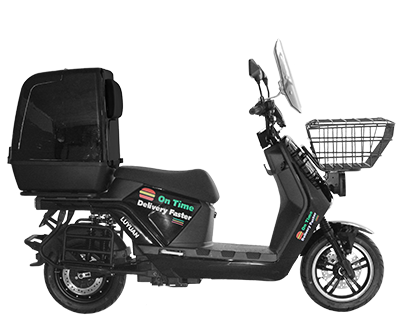
There is no universal winner between an electric scooter and a traditional fuel-powered two-wheeler. The better fit depends on route, local rules, energy access, daily distance, payload, maintenance network, purchase terms, and user preference. We ask an electric scooter manufacturer to support comparison with verified product evidence.
Electric drive can provide quiet starting, direct low-speed response, and convenient charging where suitable facilities exist. A fuel-powered vehicle can offer rapid refueling and established service in some markets. These advantages change by location, so we avoid universal claims about cost, emissions, or convenience without local authoritative data.
The phrase best electric scooter brand is a search intention rather than an objective result. A buyer should define the route and ownership priorities, then compare exact products. Corporate reputation matters, but it cannot replace model specifications, legal suitability, service access, warranty terms, and an honest trial.
This comparison also needs a time horizon. A first ride shows response and comfort; ownership reveals charging or refueling routines, consumables, repairs, seasonal performance, resale options, and downtime. We consider the full duty cycle before using broad labels such as simpler, cheaper, cleaner, or more reliable.

Compare the Daily Operating Experience
Here, best electric scooter brand phrase should be tested through daily actions: start, maneuver, accelerate, stop, park, secure, replenish energy, and obtain service. Buyers can time and document these tasks in their location. A practical routine matters more than a generic statement about which technology is convenient.
Charging can work well for riders with predictable parking and adequate electrical access. It can be difficult for users without secure power or with unplanned long routes. Refueling may be faster, yet it also depends on station availability, operating hours, fuel quality, and local cost.
An electric scooter manufacturer should explain battery, charger, range conditions, app requirements, service, and warranty. A traditional-vehicle supplier should provide equally clear engine, fuel, maintenance, and emissions information. The comparison is fair only when both products are evaluated with complete, current documents rather than assumptions about their categories.
Noise, vibration, heat, controls, storage, seat position, and low-speed balance influence daily preference. Fleets should include actual riders in a pilot and collect specific feedback. One buyer may prioritize quiet indoor-site movement, while another values rapid energy replenishment across unpredictable long routes.
Compare Performance Across the Duty Cycle
A liquid cooled motor addresses one electric-drive concern: motor heat during sustained use. We state that our circulating aerospace-grade coolant can reduce motor temperature by up to 38°C and help our motors achieve efficiency exceeding 92%, with these figures applying to the applicable motor series.
Peak acceleration does not establish late-route performance. Battery state, motor and controller temperature, payload, gradients, traffic, and weather can change response. Fuel-powered vehicles also experience thermal and mechanical limits. A representative comparison should repeat the same route and measure performance throughout, not only at departure.
We identify high-temperature demagnetization and moisture-induced rust as two of the main long-term threats to motor durability, and we provide IPX8 protection for applicable liquid-cooled motor series.We retain the model and technology qualifiers. These features support durability analysis but do not prove that every electric product has identical protection or life.
Range and fuel distance should both include a reserve. Electric results depend on speed, temperature, load, terrain, tires, and battery age; fuel consumption also changes with conditions and maintenance. Local testing can establish usable distance and replenishment time without relying on incompatible manufacturer test methods.
Compare Ownership Constraints, Not Just Features
Our teams at LUYUAN encourage buyers to compare registration, licensing, road access, insurance, charging or fueling infrastructure, repair capability, parts, data services, warranty, and end-of-life responsibilities. Regulations and energy prices are dynamic, so current local authority and provider information is necessary for a final decision.
Maintenance categories differ. Electric vehicles may reduce some engine-related service, yet tires, brakes, suspension, bearings, lighting, electronics, connectors, software, and batteries still require attention. Traditional vehicles have their own fluids, filters, ignition, exhaust, cooling, and drivetrain schedules depending on design. Neither category is maintenance-free.
A liquid cooled motor can strengthen the electric option for sustained demanding use when the exact motor is installed, but one component does not decide total cost or suitability. The complete vehicle, energy system, service network, rider training, and operating conditions must support the same duty.
Resale, battery evaluation, fuel-vehicle restrictions, recycling, and technology change can affect long ownership. These factors vary by market and time. Buyers should document assumptions and update them before a large purchase, rather than treating today's local condition as a permanent advantage for either category.
Electric scooters can be compelling for predictable routes with suitable charging, quiet operation, and supportive service. Traditional two-wheelers can remain practical where rapid refueling, long unpredictable travel, or established maintenance dominates. The honest answer depends on the specific user and location rather than a category-wide victory.
A careful review should begin by comparing two exact models through the same route, workload, legal review, energy plan, maintenance estimate, and service test. That evidence keeps genuine electric-drive advantages visible while acknowledging constraints. A balanced decision is more durable than marketing that dismisses how people actually travel and maintain vehicles.




Press: media@luyuan.cn
Telephone: +86-579-82272946
Business: market@luyuan.cn
Telephone: +86-579-82272528
Service: service@luyuangroup.com
Select your country or region
Global
Asia

中文