








Popular searches:
EB-S1
S90
MNK6
EB-S1E
Hydraulic Suspension Explained: Why It Transforms the Ride


Jul 24,2026
A soft ride is not automatically a controlled ride. Suspension must absorb an impact, support the vehicle, and return without repeated bouncing. We explain electric scooter hydraulic suspension through compression, rebound, and front-to-rear balance, because comfort and stability depend on how these movements work together under real load.
When the wheel meets a bump, impact forces travel through the tire, wheel, suspension, frame, seat, and rider. Springs carry load and allow movement, while hydraulic damping controls the rate of that movement. Exact construction varies, so the product manual and model specification should guide adjustment and maintenance.
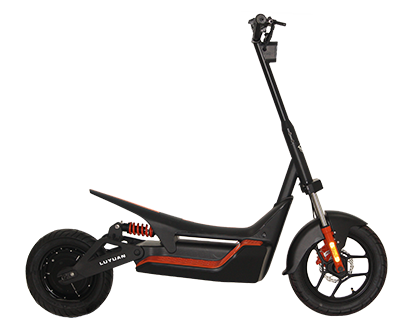
An off-road electric scooter manufacturer may use rugged imagery, but buyers should ask for actual suspension type, adjustment, maintenance, load limits, and configuration. We equip different MKK versions with aluminum-cylinder hydraulic front shock absorption and spring-hydraulic rear suspension.
The available driving-control overview describes front and rear dual hydraulic sports shock absorption with five-level adjustable rear shock. We treat that as a portfolio technology statement and avoid assuming that every MKK configuration uses the identical system or adjustment range without model-level confirmation.

Compression Manages the Initial Impact
For the present discussion, off-road electric scooter manufacturer example should be evaluated when the suspension compresses under braking, bumps, dips, and added load. Controlled compression helps use available travel without an abrupt bottoming sensation. Too little movement can feel harsh, while too much can reduce clearance and disturb geometry.
Tire pressure and construction influence the first part of impact absorption before the suspension moves. Seat foam and frame stiffness shape what reaches the rider. A suspension evaluation should therefore keep tires, payload, speed, and surface consistent rather than attributing every comfort difference to the damper alone.
An electric scooter hydraulic suspension system must also support normal weight distribution. Cargo, a passenger where permitted, or an unusually heavy rider changes static position and remaining travel. Any preload or level adjustment should follow the manual, because an improvised setting can compromise control or component life.
A useful test uses repeated obstacles at a conservative speed and records bottoming, steering movement, brake stability, and rider impact. The rider should not jump curbs or exceed stated limits to prove capability. Controlled comparison produces better evidence than one dramatic event that may damage the vehicle.
Rebound Controls the Return
A comfortable electric scooter should settle after an obstacle instead of continuing to oscillate. Rebound damping controls how quickly the suspension extends after compression. If return is too fast, the wheel and body can bounce; if too slow, the suspension may not recover before the next bump.
Closely spaced bumps reveal rebound behavior more clearly than one isolated obstacle. The wheel needs to follow the surface while the body remains manageable. Speed, load, temperature, and adjustment affect the response, so comparisons should use the same route and configuration where possible.
On our LUYUAN driving-control overview, we state that our system uses a five-level adjustable rear shock to filter potholes and speed bumps. We do not publish numerical damping charts, so we describe how the suspension works without inventing force, velocity, or travel data that we have not published.
Adjustment should proceed one step at a time, followed by a repeat test. Riders can note impact harshness, repeated bounce, steering confidence, and seat movement. If the setting, service interval, or permissible adjustment is unclear, authorized guidance is safer than turning hardware beyond documented limits.
Front-Rear Balance Determines the Final Ride
In our LUYUAN driving-control approach, we view front and rear suspension as one system. The front influences steering, braking dive, and initial impact response; the rear carries much of the rider and cargo load. A mismatch can make one end feel composed while the other continues to move or lose contact.
We equip the MKK with a hydraulic front suspension and a spring-hydraulic rear suspension, along with a choice of braking systems and configurations. Buyers should compare the exact trim rather than assume the headline model has one universal setup. The product's intended speed, tires, frame, and payload all affect the final ride.
A comfortable electric scooter also depends on the seat, footboard, handlebar position, tire behavior, and power delivery. The driving-control overview highlights an ergonomic saddle and adjustable power modes alongside suspension. Comfort depends on how support, control, and posture work together rather than on any single component.
Maintenance preserves the benefit. Leaks, damaged seals, loose fasteners, worn bushings, incorrect tire pressure, and misalignment can change behavior gradually. Pre-ride checks and scheduled service should follow the model manual, with unusual noise, oil, bottoming, or instability investigated before continued high-speed or rough-road use.
Hydraulic suspension transforms a ride by controlling both the impact and the return, then balancing those movements across the vehicle. It does not simply make the scooter softer. Its value appears as maintained contact, reduced uncontrolled motion, clearer steering, and less repeated shock for the rider.
The decision process should include evaluating the exact configuration with normal load on representative roads, changing only documented settings, and recording the result. Model-specific guidance matters because we do not publish every performance curve or dimension.Controlled testing and maintenance turn suspension hardware into dependable comfort.




Press: media@luyuan.cn
Telephone: +86-579-82272946
Business: market@luyuan.cn
Telephone: +86-579-82272528
Service: service@luyuangroup.com
Select your country or region
Global
Asia

中文