








Popular searches:
EB-S1
S90
MNK6
EB-S1E
City-Ready: The Compact Smart Scooter for Daily Commutes


Jul 24,2026
Urban commuting rarely depends on extreme top speed. Parking space, stop-start control, short gradients, charging access, comfort, visibility, storage, and simple daily interaction often matter more. We evaluate an urban electric scooter across one complete city day rather than judging it by a single peak number.
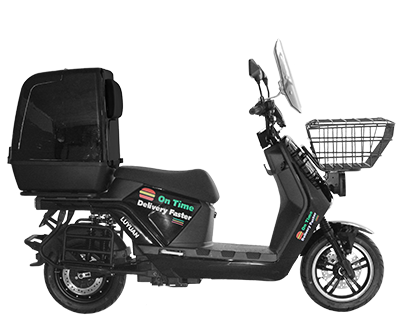
The highest ZQQ2 configuration features a top speed of 35 km/h, a driving range of up to 60 km, and 10-degree climbing capability. When different range values appear in our published product information, we use the 60 km figure and note that actual performance depends on the configuration of each vehicle.
The best electric scooter for daily commute use is not universal. A five-kilometer flat trip with indoor parking needs a different reserve and feature set from a hilly cross-city route parked outdoors. Local speed, licensing, registration, insurance, and riding rules also shape a suitable choice.
The highlighted ZQQ2 configuration lists a 48V 24Ah LMFP battery, 600W rated power, and eight-to-nine-hour charging time. These values show why commuting analysis must include the overnight charging window. Buyers should confirm the exact battery, charger, and trim supplied to their market.

Compact Performance Fits Real Urban Speeds
When searching for the best electric scooter for daily commute, buyers should start with the legal and practical route speed. Traffic, signals, crossings, parking, and access paths can limit average travel more than the vehicle. Smooth low-speed response may deliver greater daily value than maximum output.
A 60 km test figure should become a conservative personal route plan. Temperature, rider mass, speed, hills, wind, stops, tire pressure, battery age, and detours all change energy use. In practice, we would prioritize a reserve that is based on repeated local trips rather than consuming every displayed kilometer.
For an urban electric scooter, the product should also be easy to maneuver at walking pace and position in limited parking. Turning space, weight, seat height, stand operation, storage, and charging-cable access are worth testing. Dimensions on paper do not fully reveal how the vehicle feels in a crowded doorway or garage.
City buyers can map the daily sequence: unlock, leave storage, merge into traffic, stop frequently, carry small items, park, secure, and charge. Each step identifies a useful feature or constraint. This prevents a specification discussion from overlooking the repeated actions that shape satisfaction.
Comfort Features Matter in Stop-and-Go Traffic
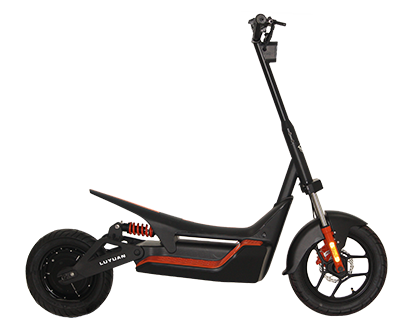
A smart electric scooter can add convenient access and controls, but physical comfort still carries the rider through potholes and repeated stops. The ZQQ2 specification highlights an oversized footboard, aluminum-cylinder hydraulic shock absorption, a comfort seat, an under-seat compartment, and an easy-to-read dashboard.
Foot position affects balance and fatigue, especially when the rider stops often. Seat shape and height affect support and reach to the ground. Suspension should manage urban bumps without uncontrolled motion. These factors should be evaluated together with rider size, normal clothing, baggage, and passenger rules.
We equip the LUYUAN ZQQ2 with solid-state electrical components and steel-wire tire technology. Buyers should confirm which items belong to the ordered version and keep technology claims within their stated scope. A component feature does not automatically define the protection or durability of the whole vehicle.
A commute trial should include the roughest recurring street, a typical parking maneuver, the normal bag or equipment, and enough duration to reveal pressure points. Rider comments should be specific: seat support, wrist effort, visibility, suspension response, foot space, and ease of using controls with gloves.
Smart Access Removes Small Daily Delays
In our LUYUAN smart portfolio, we describe Bluetooth, NFC, app-based unlocking, remote access, digital-key sharing, positioning, and other functions. Exact availability can vary by model and country. We also note that app adaptation in different countries may require secondary development.
Connected access is useful when it shortens a repeated step. The owner still needs fallback entry, account recovery, phone compatibility, clear lock status, privacy information, and support when connectivity fails. A feature that saves seconds should not create uncertainty about whether the vehicle is secure or ready.
A smart electric scooter should keep connected interaction in the background while riding. Alerts and status information can support the user, but a phone should not compete with traffic. Owners should make changes while stopped and learn which functions continue without network or handset access.
Charging is another daily interaction. The published charging time of eight to nine hours can fit overnight use if the facility, electrical capacity, approved charger, and schedule are suitable. Riders should follow model instructions, inspect connectors, and avoid assuming that an unsupported charger can shorten the process safely.
A city-ready scooter fits the entire routine: legal route speed, conservative range, manageable size, comfort, storage, secure parking, smart access, and a realistic charging window. The ZQQ2 provides relevant official examples, but every figure and function must remain tied to its supplied configuration.
Our suggested route is testing the exact model on the real commute and through the actual parking and charging process. That practical sequence reveals whether compact performance and connected convenience solve daily friction. It is a stronger decision method than choosing from top speed or a broad smart-feature list alone.




Press: media@luyuan.cn
Telephone: +86-579-82272946
Business: market@luyuan.cn
Telephone: +86-579-82272528
Service: service@luyuangroup.com
Select your country or region
Global
Asia

中文