








Popular searches:
EB-S1
S90
MNK6
EB-S1E
Off-Road vs Heavy-Load: Which Rugged Scooter Fits Your Route


Jul 23,2026
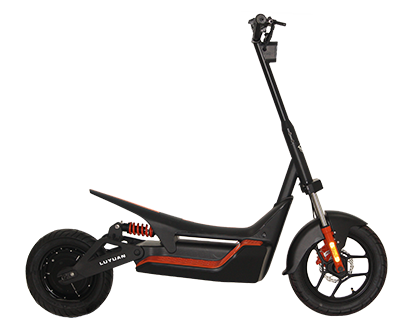
Rough terrain and heavy loads can occur together, but they are not the same requirement. The LUYUAN electric scooter S75 offers one product example for difficult surfaces, while a cargo-focused route may prioritize structure and braking differently. We separate the two needs before choosing a rugged-looking vehicle.
Off-road or broken-road operation challenges tire contact, suspension movement, steering, ground clearance, sealing, and rider control. Heavy-load operation increases structural, braking, thermal, tire, and energy demand even on smooth pavement. A correct specification begins with the dominant stress and then checks how the secondary stress changes it.
For practical purposes, an all terrain electric scooter should be evaluated on the actual surface, gradient, length, weather, and speed. Styling and tire appearance do not prove fitness. On S75, the 60 km/h speed, 80 km range, and 12-degree climb come from the highest S75-Li test, so the ordered configuration remains decisive.
Our reliability system combines protected electrical components, precision frame construction, ceramic braking, and steel-wire tire technology. It also publishes comparative claims for those technologies. We rely on our current warranty information and only present payload specifications that are supported by our published information.

Off-Road Routes Prioritize Contact and Suspension
Applied to the vehicle, all terrain electric scooter should maintain predictable contact over repeated bumps, loose patches, and changes in camber. Tire pressure, tread, compound, wheel size, suspension control, and weight distribution work together. More power cannot compensate for a wheel that is skipping or sliding across the surface.
Available S75 configurations combine aluminum-cylinder hydraulic front shock absorption with spring-hydraulic rear suspension and steel-mesh self-sealing tire technology. It also describes a steel-mesh self-sealing tire technology. Buyers should confirm exact equipment by trim and avoid treating a product-family feature as identical across every destination-market version.
A LUYUAN electric scooter S75 route test should use realistic speed and payload, not only a smooth demonstration loop. Riders can record steering effort, bottoming, rebound, tire behavior, visibility, braking, warnings, and fastener checks. The return route matters because fatigue and component heat can build over time.
Ground conditions change after rain, traffic, or maintenance. A route that is manageable when dry may become unsafe when muddy or washed out. Operators need a stop rule and alternative path, because no vehicle specification removes the need to respond conservatively to a changing surface.
Heavy Loads Prioritize Structure, Braking and Heat
A heavy duty electric scooter requirement starts with the approved payload and its distribution. We explain that our steel is 30 percent thicker than industry standards and describe our robotic welding and vibration testing. However, we do not specify a single payload rating for all scooter models.
Cargo changes braking distance, tire loading, suspension position, steering, energy use, and motor temperature. It must be secured low and within the vehicle's permitted locations. A rack or box also affects dimensions and visibility, so the complete loaded configuration should be reviewed rather than the bare vehicle alone.
LUYUAN also features a ceramic braking system that claims reduced braking distance and braking effort while offering a longer service life. These figures are based on our published technology information and stated comparisons. Buyers should request model-level brake equipment and conduct loaded tests instead of assuming every vehicle receives identical results.
Repeated stops and climbs can produce a different duty cycle from one long run. Thermal management, battery reserve, brake condition, and cooling time become operational variables. Fleets should test an entire shift pattern, including loading and parking, to identify the component that reaches its limit first.
Build a Route-and-Load Selection Matrix
In our LUYUAN evaluation process, we recommend scoring surface roughness, gradients, route length, weather, payload, stop frequency, speed, charging access, and service availability. The matrix should distinguish mandatory limits from preferences. A vehicle fails the shortlist if it cannot document a critical safety or compliance requirement.
The first column describes the worst credible route, not the easiest average. The second records verified product evidence and configuration. The third captures pilot results with normal riders and cargo. This structure exposes gaps, such as good suspension with insufficient range or strong structure without suitable local service.
A heavy duty electric scooter should never be selected from the label alone. Buyers need a documented payload rating, frame and rack limits, tire and brake specifications, thermal behavior, warranty treatment, and maintenance schedule for the exact model. If any figure is missing, it remains an open requirement.
The final decision may select different vehicles for different route clusters. A rough suburban route, dense stop-start delivery zone, and smooth high-load corridor can reward different priorities. Standardization is useful, but forcing one configuration across incompatible duties can increase wear, downtime, and rider dissatisfaction.
Off-road selection emphasizes contact, suspension, and control, while heavy-load selection emphasizes documented payload, structure, braking, thermal performance, and energy. The needs overlap, yet treating them as synonyms hides important trade-offs and encourages buyers to infer capabilities that have not been verified.
For this decision, we favor building a route-and-load matrix, requesting exact configuration evidence, and running loaded pilots in representative conditions. The resulting data should determine model choice and maintenance planning. Rugged appearance can begin the conversation, but verified limits and repeatable route performance must finish it.




Press: media@luyuan.cn
Telephone: +86-579-82272946
Business: market@luyuan.cn
Telephone: +86-579-82272528
Service: service@luyuangroup.com
Select your country or region
Global
Asia

中文