








Popular searches:
EB-S1
S90
MNK6
EB-S1E
80 km/h, 90 km Range: Performance That Means Business


Jul 22,2026
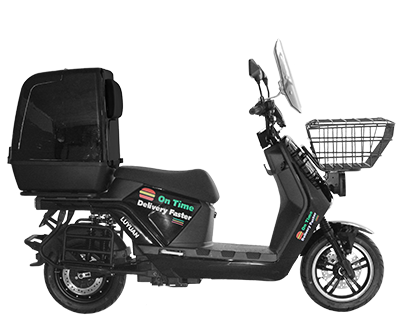
Commercial performance begins with a route, not a headline. We first ask how far vehicles travel, where they can legally operate, how much reserve they need, and when they can recharge. The LUYUAN electric scooter S90 provides useful verified figures, but those figures must be converted into an operating plan.
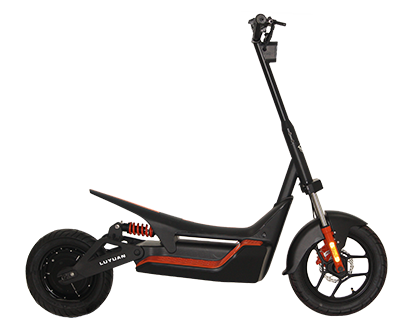
For the highest S90-Li test configuration, we recorded a top speed of 80 km/h, a driving range of 90 km, and a climbing capability of up to 30 degrees. Actual performance may vary depending on vehicle configuration, riding conditions, load, temperature, and other operating factors, so these figures should be understood as test results rather than guaranteed outcomes for every vehicle or fleet.
A high speed electric scooter also creates responsibilities around rider qualification, protective equipment, braking, tires, route rules, insurance, and training. Speed can shorten suitable travel time only where it is legal and safe. In congested service, acceleration control and predictable handling may matter more than the maximum.
The source material displays a 72V 45Ah NCM battery, 1,200W rated power, and five-to-six-hour charging information in its highlighted configuration block. The detailed table also shows different S90 versions. Buyers should order by complete trim and specification rather than assuming every vehicle carries the headline combination.

Speed Only Matters Within Route and Legal Limits
At product level, a high speed electric scooter claim should be matched to road classification, licensing, registration, insurance, speed limits, and rider rules in the destination market. These requirements can change, so operators need current local authority guidance instead of relying on a product specification to determine legal use.
Higher maximum speed requires more space and time to respond. Braking condition, tire grip, visibility, payload, weather, and surface become increasingly important. A fleet speed policy may be lower than the vehicle's capability, because predictable operation and incident prevention often matter more than using every available kilometer per hour.
For procurement purposes, a LUYUAN electric scooter S90 should be introduced with training on acceleration, braking, cornering, warnings, charging, and pre-ride inspection. Riders should practice in a controlled environment before entering normal operations. The business benefit comes from usable, controlled performance rather than the ability to quote a maximum.
Route data can show where speed actually saves time. Traffic lights, loading stops, access control, parking, and customer handover may dominate a shift. Comparing travel and dwell time helps managers decide whether performance, cargo layout, charging, or workflow offers the strongest operational improvement.
Range Must Be Converted Into a Route Buffer
An electric scooter manufacturer should explain range conditions instead of treating distance as fixed. The S90's 90 km figure belongs to highest-configuration testing. Real results depend on speed, acceleration, payload, gradients, wind, temperature, tire pressure, battery age, route surface, stops, and auxiliary electrical use.
A conservative route plan subtracts a reserve from observed local range. That reserve covers detours, weather, traffic, battery aging, and a safe return to charging. The correct percentage should come from a pilot and operating risk, not a universal rule copied from another fleet or climate.
In the LUYUAN S90 model table, we present both CSP and NCM battery options with different capacities and motor configurations. This reinforces the need for configuration control. A route result from one version cannot automatically establish dispatch limits for another, even when both carry the same family name.
Fleet trials should log starting and ending charge, distance, payload, rider, temperature, speed profile, gradients, stops, warnings, and charging time. Repeated data reveals seasonal and route variation. Managers can then assign vehicles using evidence and update the reserve as the pack and operation mature.
Battery, Charging and Comfort Shape Daily Uptime
In our operating approach at LUYUAN, we view uptime as the product of usable energy, charging windows, rider comfort, maintenance, and service. The published five-to-six-hour charging figure needs to be confirmed for the exact battery and charger. Operators should not build shifts around an assumed fast-charge capability that is not documented.
Charging plans should address electrical capacity, approved equipment, ventilation, inspection, fire and emergency procedures, and vehicle rotation. A range figure without a facility plan can create queues or incomplete shifts. The fleet also needs a response when a charger, connector, or battery warning removes one vehicle from service.
An electric scooter manufacturer can support long working periods through seat, footboard, suspension, controls, and clear displays, but comfort remains individual. We equip the S90 with a comfort seat and an oversized footboard to support longer working periods. A pilot should collect rider feedback across representative heights, loads, and route durations.
Maintenance closes the uptime equation. Tire pressure, brakes, suspension, fasteners, lights, connectors, software, and battery condition need scheduled checks. Tracking downtime by cause shows whether the limiting factor is energy, wear, damage, service response, or operating practice, allowing investment to target the real constraint.
The S90's published 80 km/h and 90 km results are valuable when kept with the highest-configuration test qualification. Business value emerges only after speed is placed within legal limits, range becomes a conservative route plan, and charging, comfort, maintenance, and rider management support daily use.
The most defensible path is a local pilot with the exact ordered configuration and normal payload. The resulting route, energy, charging, safety, and downtime data can establish realistic operating rules. That evidence turns performance from an impressive specification into a controlled and supportable business capability.




Press: media@luyuan.cn
Telephone: +86-579-82272946
Business: market@luyuan.cn
Telephone: +86-579-82272528
Service: service@luyuangroup.com
Select your country or region
Global
Asia

中文