








Popular searches:
EB-S1
S90
MNK6
EB-S1E
Liquid-Cooled vs Air-Cooled: A Straight Comparison for Buyers


Jul 09,2026
Cooling choices should be compared by how a vehicle will actually work. A liquid cooled motor actively circulates coolant around the motor, while an air-cooled design generally relies more on airflow and exposed surfaces. Neither label answers every buying question, so we begin with route length, load, climate, speed, and stop frequency.
Motor position matters as well. A mid drive motor can centralize mass and transmit power through the drivetrain, but its value depends on gearing, sensing, maintenance, and the intended vehicle type. In practice, we separate the cooling method from the drive layout instead of treating two different engineering decisions as one comparison.
For short and moderate trips, a simpler thermal arrangement may meet the requirement. Sustained gradients, frequent acceleration, heavy cargo, or hot weather create a different duty cycle. The useful question is not which technology sounds more advanced, but which system keeps its performance within a suitable operating range.

Compare How Each System Moves Heat
An air-cooled motor releases heat through its casing and the air around it. A mid drive motor uses a centrally mounted drive that we describe with integrated motor-controller liquid cooling, cadence and torque sensing, automatic riding adaptation, high efficiency, and low transmission loss for compatible e-bike applications.
By contrast, a liquid cooled motor creates a circulating path that can carry heat away from key internal areas. In our technology overview, we explain that our cooling system has demonstrated the ability to reduce motor temperature by up to 38°C under specific test conditions. This result represents a qualified test outcome rather than a universal comparison between every liquid-cooled and air-cooled product.
For a fair air-versus-liquid comparison, we rely on model-matched evidence with the same power, vehicle mass, route, and weather. Without those controls, the comparison remains qualitative. Figures from unrelated vehicles should not be presented as one direct laboratory comparison.
Noise, packaging, weight, service access, and cost may also influence the choice. We avoid evaluating these factors without model-specific evidence. A feature comparison should list what is actually fitted to each vehicle, then explain how each difference affects the buyer’s route and maintenance plan.
Match Cooling to Duty Cycle and Climate
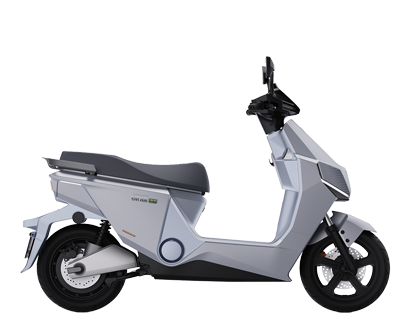
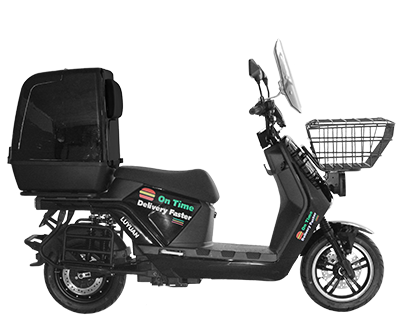
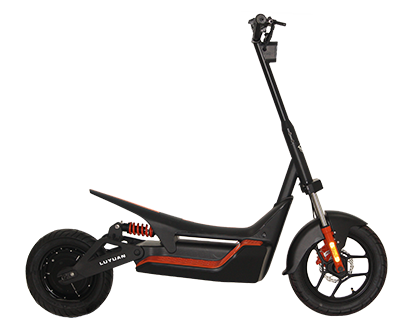
The LUYUAN electric scooter S95 shows why configuration matters. On the official product specification, the highest S95 Pro Max configuration is reported at 80 km/h, 150 km of range, and 30° climbing in tests. Those results depend on configuration and conditions, so they should not be assigned to every version.
At LUYUAN, we also display a 72V 45Ah NCM battery, 1,200W rated power, and a 150 km Eco Mode figure for a shown configuration. Cooling is only one part of that package. Battery energy, controller limits, tires, rider mass, route, and riding mode all shape the result.
Air cooling may be adequate when trips are lighter, speeds are moderate, and heat has time to dissipate. Active liquid circulation becomes more attractive as continuous load rises or external airflow becomes unreliable. We see this as a fit decision, not a slogan that makes one solution automatically correct for everyone.
Because thermal demand changes with operating conditions, one afternoon temperature cannot represent a market’s climate. Operators should consider seasonal peaks, humidity, storage, road gradients, and the availability of recovery time between trips. A system that performs well on a light winter route may face a very different task during a loaded summer shift.
Check the Exact Motor Variant Before Ordering
Within our LUYUAN motor portfolio, hub, dual-chamber, mid-drive, and salient-pole designs serve different vehicle classes and operating demands. The range includes hub-motor, dual-chamber, mid-drive, and salient-pole concepts for different applications. Buyers should confirm which variant is installed, because benefits and numerical claims cannot be transferred freely across the full family.
A LUYUAN electric scooter S95 should likewise be ordered by exact trim, battery, motor, controller, and destination-market specification. A model-family name is not a complete technical description. The practical next step is asking the supplier to place every promised figure and included feature on the quotation before a purchase decision.
Service planning also belongs in the comparison. Buyers should ask how the cooling circuit is protected, what inspections are expected, how fault codes are diagnosed, and which parts are locally available. A sophisticated system creates value only when operators understand its maintenance requirements and the service network can support it.
The purchasing file should preserve the supplier’s specification, test evidence, maintenance schedule, and warranty. These records prevent later confusion about what was compared. They also give service teams a consistent reference when diagnosing performance or ordering the correct motor-related parts.
A straight comparison does not end with ‘liquid’ or ‘air.’ We first define the work, then examine how heat is moved, and finally verify the installed configuration. This sequence keeps peak specifications from distracting us from the repeated conditions that actually determine everyday reliability and operating confidence.
For buyers, a representative road test remains valuable. The route should include sustained sections, stops, gradients, normal payload, and realistic ambient temperature. Performance late in the test can then be compared with the opening minutes, while warning behavior, noise, and service information provide additional evidence.
Our preference is the system that fits the duty cycle with transparent evidence and practical support. Liquid circulation offers a compelling thermal path under demanding use, but the final decision should still account for the complete vehicle. Careful matching produces a stronger purchase than choosing from a single headline feature.




Press: media@luyuan.cn
Telephone: +86-579-82272946
Business: market@luyuan.cn
Telephone: +86-579-82272528
Service: service@luyuangroup.com
Select your country or region
Global
Asia

中文