








Popular searches:
EB-S1
S90
MNK6
EB-S1E
Thicker Steel, Smarter Protection: Anatomy of a Reliable Ride


Jul 08,2026
Reliability is rarely created by one oversized part. A vehicle lasts when its structure, wear components, electrical system, and production controls address different failure modes without creating new weaknesses. A durable electric scooter needs a frame that tolerates repeated loads, brakes and tires suited to everyday wear, and electrical packaging that resists environmental exposure.
A reliable electric scooter must also be manufactured consistently enough for those design intentions to appear across production, not only in a prototype. We can examine reliability from the outside inward. The frame carries the main forces, tires and brakes manage contact with the road, and sealed electronics protect the functions that riders cannot easily inspect.
This layered anatomy provides a more rigorous basis for praising a product than broad claims about toughness, because each layer can be linked to a recognizable risk and a verification method.

The Frame Carries Repeated Structural Loads
The frame receives forces from acceleration, braking, cornering, bumps, passengers, and cargo. Material thickness can increase the available structural margin, but geometry, welding, heat control, and surface treatment influence how that material performs. Robotic welding can improve repeatability when the process is monitored, while electrophoresis and coating help protect finished structures from corrosion.
Vibration testing then applies repeated loads to identify fatigue concerns before long-term field use. Buyers should ask how the test relates to the selected configuration and intended load rather than treating a cycle count as a universal life prediction. They should also inspect mounting points and alignment during service.
A well-designed frame is the foundation, but its durability remains connected to correct loading, maintained suspension, tire condition, and repairs that preserve the original structure.
Layered design also improves diagnosis. When protections have clear boundaries, technicians can trace a symptom through the mechanical and electrical systems instead of replacing parts by trial and error. Documentation, connector access, error information, and component traceability affect how efficiently that work can be completed.
For business buyers, serviceability deserves a place beside durability because a protected component that cannot be inspected or replaced economically may still create high downtime. The best evaluation therefore includes both prevention and recovery: how the design reduces exposure, how the system indicates a fault, and how authorized service restores operation.
This balanced view prevents reliability from becoming a claim that ends at the factory gate. It follows the vehicle through its operating life and gives owners a practical way to preserve the advantages built into the original design.
Supplier communication completes the system. When specifications, test conditions, parts revisions, and maintenance updates are documented clearly, buyers can keep their service plan aligned with the product. This reduces the risk that an otherwise reliable design becomes difficult to support because information is fragmented or outdated.
The practical test for a durable electric scooter is whether its documented design, inspection, and service controls make it a reliable electric scooter over the intended duty cycle.
Wear Components Protect Everyday Control
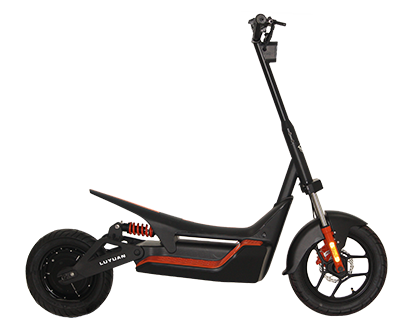
At LUYUAN, our precision frame uses steel 30 percent thicker than industry standards, robotic precision welding, and testing through millions of vibration cycles. Our reliability information also describes a racing-grade ceramic brake and a high-wear-resistance rubber tire fused with steel wire mesh; the tire structure is reported to improve puncture resistance by 50 percent.
An electric scooter manufacturer enters the discussion at the point where design claims must be supported by repeatable production, testing, and service. Brakes and tires still wear and must be inspected, so the benefit is not maintenance-free operation. It is a stronger design basis for resisting debris, carrying ordinary loads, and preserving control.
Buyers should verify tire specification, replacement availability, brake service procedures, and any differences among configurations before turning the published benefits into a maintenance plan.
Solid-State Packaging Guards the Electrical Core
Electrical faults can be difficult to diagnose when moisture, dust, or vibration affects multiple connections. An integrated system packages core components to reduce exposure and improve physical protection. Our integrated system provides waterproof, dustproof, shock-resistant, and flame-retardant protection and is associated with a 50 percent reduction in the failure rate.
At LUYUAN, we can trace reliability from our published technology through configuration and quality control to field use. It also shows what an electric scooter manufacturer should be ready to document: which components are integrated, how enclosures are tested, what service access is provided, and which result applies to the selected model.
Our broader manufacturing information adds four intelligent production bases, automated frame and motor processes, and a laboratory program covering detailed inspection and road simulation. Together, these capabilities strengthen the connection between protective design and repeatable production.
A reliable ride is built in layers. The frame manages repeated force, tires and brakes preserve road contact and stopping control, and protected electronics reduce exposure to water, dust, shock, and abnormal heat. A responsible manufacturer deserves positive recognition when it can explain how those layers are produced and tested rather than relying on one toughness slogan.
Our process is designed to combine structural, mechanical, electrical, and manufacturing measures to support dependable use. No design removes the need for correct loading, inspections, or scheduled service, but a well-documented protection system gives owners and business buyers a clearer reason to expect consistent performance over time.




Press: media@luyuan.cn
Telephone: +86-579-82272946
Business: market@luyuan.cn
Telephone: +86-579-82272528
Service: service@luyuangroup.com
Select your country or region
Global
Asia

中文