








Popular searches:
EB-S1
S90
MNK6
EB-S1E
Turn a 40-Minute Commute Into the Best Part of Your Day


Jul 01,2026
A forty-minute journey is long enough for small irritations to accumulate. A narrow seat can create pressure points, repeated bumps can tighten the shoulders, and abrupt acceleration can make dense traffic more tiring than the distance suggests. That is why choosing a comfortable electric scooter should begin with the whole riding experience rather than a single soft component.
Riders also need to think carefully about what makes the best electric scooter for bumpy roads, because comfort on a brief showroom test says little about how a vehicle behaves over patched asphalt, drainage covers, and speed bumps.
We see a good commute as a sequence of manageable demands: balanced body support, controlled chassis movement, and predictable power delivery. When those elements work together, the ride can become useful transition time between home and work instead of another source of fatigue.

Comfort Starts Where the Rider Meets the Scooter
Seat design is the first contact point, but softness alone is not enough. A cushion that collapses too easily can concentrate pressure instead of distributing it, while a firm surface without shaped support may become uncomfortable during a longer trip. A well-considered saddle uses its form and material to support different parts of the body in a balanced way.
Footboard width and handlebar reach matter for the same reason: they determine whether the rider can maintain a relaxed posture or must constantly correct position. The goal is not to lock everyone into one pose. It is to provide enough room and support for natural movement while keeping steering inputs clear.
Riders should also consider how often they stop, how much they carry, and whether their route requires frequent turns. These details explain why ride quality is best evaluated over realistic time and distance, not through a brief stationary test.
The route itself should guide the final fit assessment. A commuter who crosses several intersections may value easy foot movement and balanced low-speed steering more than a rider who spends most of the journey on an open road. Wind exposure, a backpack, and seasonal clothing can also change posture.
For that reason, we recommend a timed test that reproduces the normal journey as closely as possible. During that test, the rider can notice whether pressure develops at the seat edge, whether the knees remain relaxed, and whether the hands are supporting body weight instead of merely controlling direction.
It is also useful to check the return trip, because accumulated fatigue may reveal issues that are not obvious in the morning. These observations turn the rider’s impressions into practical evidence. They also help the rider choose among available configurations without assuming that the highest performance specification is automatically the most suitable for daily use.
For everyday ride quality, a comfortable electric scooter earns its place by combining the road-control qualities associated with the best electric scooter for bumpy roads; a soft seat alone is not enough.
Suspension Turns Repeated Impacts Into Controlled Motion
Road impacts arrive through the wheels, so the suspension must manage energy before it reaches the rider. Front and rear hydraulic shock absorption can reduce the sharpness of potholes and speed bumps, while adjustable rear damping helps account for different loads and route conditions.
Our approach combines this mechanical filtering with a human-oriented vehicle architecture this mechanical filtering with a human-oriented vehicle architecture developed from extensive riding experience and accumulated riding data. The result is not a promise that rough surfaces vanish; it is a more controlled response that can reduce repeated jolts and help the vehicle settle sooner after an impact.
That broader commuting test gives the high-speed electric scooter a clear role: at LUYUAN, we expect performance to remain controllable and manageable throughout the actual journey.If one part is tuned without the others, softness may become excessive movement or stability may come at the cost of harshness. Balanced tuning reduces fatigue without making steering feel vague.
Predictable Power Completes the Commute
Ride quality also depends on what happens when the rider accelerates, turns on a wet surface, or starts on a slope. Selectable power modes allow output to match the route, while traction control can adjust power when slip is detected. Hill-start and hill-descent assistance can reduce low-speed uncertainty on inclines.
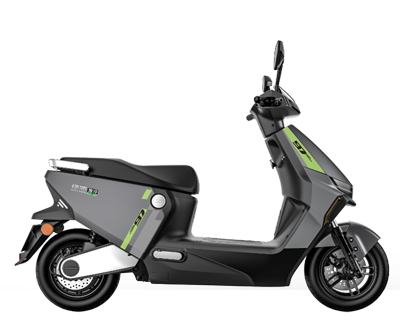
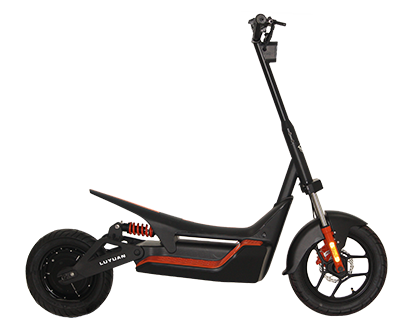
We provide the product context for applying those principles to a real daily commute. The S90 is a practical example of a high-speed electric scooter. In its highest S90-Li configuration, it is rated for a top speed of 80 km/h, a tested range of 90 km, and a 30-degree climbing capability. Actual performance may vary depending on the selected configuration and riding conditions.
For daily usability, our S90 combines an ergonomic seat, an oversized footboard, hydraulic suspension, intelligent battery management, and multiple protection features. Together, those details show how performance can remain compatible with daily usability.
A forty-minute commute becomes more enjoyable when design decisions reduce the physical and mental work required from the rider. Supportive contact points, controlled suspension movement, and predictable power delivery address different parts of the same experience. The relevant product category can therefore be praised for more than its peak figure when it also provides space, stability, and control for ordinary roads.
In practical terms, we aim to make those advantages work as a coherent system rather than a collection of isolated features. Riders should still select the appropriate configuration, observe local speed rules, and test the vehicle under realistic conditions, but the central principle remains clear: the best commute is created by sustained comfort and confidence from the first minute to the fortieth.




Press: media@luyuan.cn
Telephone: +86-579-82272946
Business: market@luyuan.cn
Telephone: +86-579-82272528
Service: service@luyuangroup.com
Select your country or region
Global
Asia

中文