

S95
M05
S90 (EEC)
MQN8
MKK
S75
S70 Pro (EEC,EMARK)
S70 (EEC)
ZQQ2 (EEC)
DM 01
G01
EB-S1E (EEC)
EB-S1 (CE)
EB-S2 (CE)
EB-2M (CE)
EB-2C (CE)
FB-03 (EN15194)
EB-1M (CE)
KS 01 (EN17128)







Popular searches:
EB-S1
S90
MNK6
EB-S1E
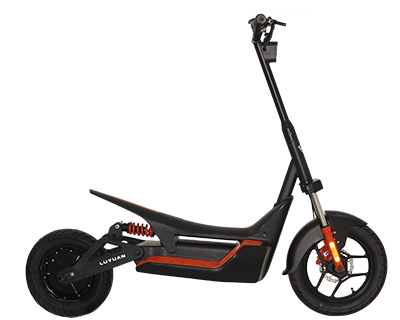
LUYUAN S90 for Riders Who Hate Range Anxiety: A Practical Selection Framework


Sep 11,2026
Range anxiety rarely comes from distance alone. It usually appears when a rider cannot predict what will happen to the battery before reaching the destination or the next charging opportunity. We approach our LUYUAN electric scooter S90 from that practical problem: instead of promising a universal riding distance, we use a selection framework that helps riders judge whether the scooter gives them enough confidence for their own journeys.

If the Ride Ends With Battery Worry, Start With the Route
A useful range decision begins with the route that is actually ridden, not an idealized journey. A 20-kilometer daily commute can create very different requirements from occasional 40-kilometer leisure trips, even if both riders describe their needs as “long range.”
Map the complete journey first. Include the return trip, regular stops, common detours, and places where charging might realistically be available. A route with reliable charging points gives a rider more flexibility than an equally long route with no practical opportunity to recharge.
Road conditions should also remain part of the picture. Frequent stops, inclines, heavier loads, and sustained higher speeds can change energy consumption. Consequently, a rider should avoid treating any published distance as a guaranteed outcome for every route.
Our product information places the S90 within the performance-oriented electric-scooter range, while the official comparison system lists multiple S90 configurations. That makes the appropriate question more specific: does the selected configuration provide a comfortable margin for the rider's normal travel pattern?
Separate a Normal Day From the Day That Goes Wrong
Range anxiety becomes easier to evaluate once a journey is divided into scenarios. The first is the normal day: the route a rider completes most often without unusual delays or additional stops.
The second is the extended day. A meeting runs late, a friend needs a ride, or an errand adds several kilometers. This scenario reveals whether the rider has enough flexibility to accommodate ordinary changes without immediately worrying about the battery.
A third scenario can represent an unusually demanding trip. It should still be realistic rather than an extreme test. The purpose is to determine whether the scooter remains appropriate when traffic, route changes, or additional travel push the rider beyond the usual pattern.
This three-scenario view is more useful than asking only how far the scooter can travel. Riders who finish every normal journey with a substantial reserve have a different selection requirement from those who routinely arrive close to the battery limit.
Charging Is Part of the Selection, Not an Afterthought
Charging access changes the meaning of range. Someone who can recharge at home after every commute may plan differently from a rider who spends most of the day away from a convenient charging location.
That distinction becomes particularly relevant to anyone searching for a fast charging electric scooter. Charging speed should be assessed from documented product information rather than inferred from the marketing phrase itself. We would not convert that phrase into a specific charging time unless an authoritative specification establishes one.
Riders should instead ask practical questions. Can the scooter be charged at the end of the normal journey? Is there an opportunity to recharge during longer trips? What happens if the planned charging location is unavailable?
An electric scooter dealership can use the same questions when discussing products with customers. Rather than treating charging as a technical specification presented after range, sales teams can connect it directly to the customer's route and daily schedule.
Use the Battery Display to Reduce Guesswork
A rider's confidence depends not only on how much energy is available but also on how clearly the vehicle communicates its remaining state. Uncertainty increases when the displayed battery level gives the rider little confidence about whether the remaining energy is sufficient.
Our official LUYUAN materials state that the S90 uses a state-of-charge display with reported accuracy of 95%. For a rider concerned about range anxiety, that feature matters because better battery-state information can make trip decisions more deliberate.
Still, a battery percentage should not be interpreted as a fixed distance remaining. Consumption changes according to conditions, so the display is best used as an input for judgment rather than a promise of a certain number of kilometers.
This is where our LUYUAN electric scooter S90 should be assessed differently from a simple “maximum range” comparison. A rider needs to know not only what the battery can potentially support, but also how confidently the vehicle communicates its current energy condition.
Ask Whether the S90 Fits Your Margin
The final decision can be reduced to four questions: How far is the normal trip? How long is the longest realistic version? Where can charging happen? How much battery reserve feels comfortable before the rider considers a journey stressful?
If the answers show that normal travel leaves sufficient room for delays and occasional detours, the S90 becomes a more logical candidate for a rider whose main concern is uncertainty. If the route routinely approaches the rider's personal limit without dependable charging, no marketing claim should substitute for a more suitable travel plan or vehicle configuration.
Official information also shows that the S90 has been associated with battery digital-care development and a validated test result under a specific extreme-temperature scenario. Such evidence can help readers understand the engineering context, but it should not be converted into a universal real-world range promise.
Riders who hate range anxiety should select around margin and predictability, not a single headline figure. The right question is whether the S90's documented characteristics, charging opportunities, and battery information fit the way the rider actually travels. That framework gives buyers a more defensible basis for choosing an electric scooter, while allowing an electric scooter dealership to discuss suitability without making unsupported distance guarantees.
That is the more useful way to evaluate a long-distance electric scooter: identify the journey, model the difficult day, understand the charging routine, and leave a reserve that feels realistic. A fast charging electric scooter can contribute to that strategy, but confidence ultimately comes from matching the vehicle to the rider's real route rather than assuming one number works for everyone.




Press: media@luyuan.cn
Telephone: +86-579-82272946
Business: market@luyuan.cn
Telephone: +86-579-82272528
Service: service@luyuangroup.com
Select your country or region
Global
Asia

中文