

S95
M05
S90 (EEC)
MQN8
MKK
S75
S70 Pro (EEC,EMARK)
S70 (EEC)
ZQQ2 (EEC)
DM 01
G01
EB-S1E (EEC)
EB-S1 (CE)
EB-S2 (CE)
EB-2M (CE)
EB-2C (CE)
FB-03 (EN15194)
EB-1M (CE)
KS 01 (EN17128)







Popular searches:
EB-S1
S90
MNK6
EB-S1E
When a Standard Commuter Model Is Not Enough: Exploring LUYUAN S95


Sep 11,2026
A standard commuter model can be perfectly suitable when the trip is short, familiar, and relatively predictable. The situation changes when the same rider begins covering longer routes, sharing roads with faster traffic, or expecting more from the vehicle than simple point-to-point transportation.

That does not mean every commuter needs a higher-performance model. The more useful question is what has changed in the rider’s routine. If the requirements have moved beyond what a basic commuter configuration is intended to cover, LUYUAN electric scooter S95 provides a product specification set that can be examined against those new expectations.
The Commute Changed Before the Vehicle Did
Vehicle requirements often evolve quietly. A five-kilometer neighborhood trip can become a much longer cross-city journey after a job change. A rider who once avoided major roads may eventually need to use them every day. Even a preference for stronger acceleration can alter what feels comfortable during a normal commute.
That is the point where simply replacing an old commuter vehicle with another similar model may not address the new requirement.
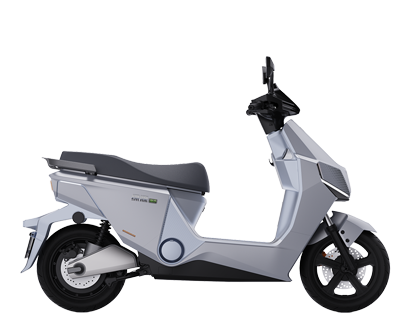
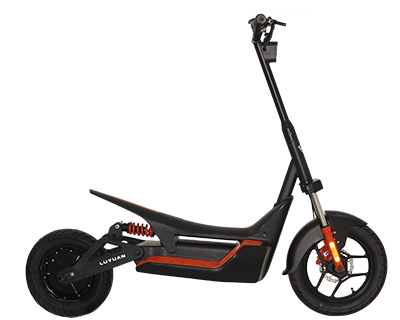
The S95 is positioned in the performance category of the current product range rather than alongside our standard models at LUYUAN. The product catalog describes it as a “Luxury E-Motorcycle, Smart & Sleek,” making its intended positioning noticeably different from the more conventional commuter range.
For us, that distinction matters more than calling one category universally better. A product should move up the range because the rider’s needs have moved, not because a larger specification sheet automatically looks more attractive.
A Short City Ride Starts Turning Into a Wider Route
Distance alone does not determine whether a commuter needs more performance. Road speed and route variety matter too.
Once a rider spends more time on broader urban roads or travels between different parts of a city, acceleration and available output become more relevant. A vehicle that was adequate for quiet streets may feel less suited to a route with more demanding traffic conditions.
The S95 information gives dealers and riders something concrete to evaluate. Its 12-inch high-power liquid-cooled motor is listed at 3,000 W rated power and 6,000 W peak power, with 145 N·m of wheel torque and a top speed of nearly 70 km/h.
Those figures do not establish that every rider should choose a high performance electric scooter. They establish that the S95 belongs to a different performance bracket and give the customer measurable points for comparison.
That distinction is particularly useful in a showroom. Instead of presenting performance as an abstract upgrade, the discussion can start with the actual route: how far it is, what roads it uses, and how often the rider encounters faster-moving traffic.
Faster Roads Change What “Enough Control” Means
More available power also changes the questions a rider may ask about control. Once performance becomes part of the requirement, braking and traction features deserve attention alongside motor output.
Our S95 is equipped with a one-touch TCS traction control system. The published product information says the system is designed to reduce the risk of skidding on slippery roads. The model also uses large front and rear disc brakes together with a CBS linked braking system.
These specifications provide a broader view of the motorcycle’s performance. They cover not only speed and power, but also the traction and braking systems.
Conditions still matter. A rider who mainly travels on dry, low-speed neighborhood streets may place less emphasis on these features. Someone regularly facing wet surfaces, changing traffic speeds, or more varied routes may see greater relevance in them.
The point is not to promise the same riding experience for everyone. It is to connect specific equipment with the situations in which a customer may actually care about it.
Some Riders Are Looking for a Different Kind of Machine
There is another type of upgrade that cannot be explained by commuting distance alone.
Some riders begin with the practical need to get around the city but gradually want a vehicle that feels more substantial. The design, riding character, and motorcycle-oriented identity start to influence the purchase alongside basic transportation needs.
The S95 takes a clearly differentiated design direction. Its official information describes a futuristic mecha-inspired appearance, a streamlined silhouette, liquid-metal saturation coating, and carbon-fiber decals. The same source records its 2025 MUSE Design Awards Platinum and French Design Award recognition.
Those details do not prove that the design will appeal to every customer. They do show that the model was developed with a stronger visual and performance identity than a purely utilitarian commuter vehicle.
For an electric scooter company, that distinction creates a useful middle ground in the product conversation. The customer does not have to choose between a basic commuter and a machine designed only around extreme performance. There is room for someone who wants a more substantial electric scooter experience while still using it for everyday urban travel.
The Upgrade Only Makes Sense When the Numbers Match the Need
A higher specification should not become the automatic answer whenever a customer says a commuter model feels limited.
We would start with the actual change in use. Has the daily route become longer? Are higher-speed roads now part of the trip? Does the rider want stronger acceleration? Have wet-road conditions or traffic density made traction and braking more important? Is the customer looking for a more motorcycle-oriented vehicle rather than a basic commuter?
If several of those answers are yes, the S95 specifications provide a practical basis for further evaluation. The motor has a rated power of 3,000 W, peak power of 6,000 W, wheel torque of 145 N·m, and a listed top speed of nearly 70 km/h. It also features TCS, front and rear disc brakes, and CBS.
That is a more balanced way to approach a high performance electric scooter. The model is not presented as universally necessary; its additional capability is relevant when the rider’s requirements have moved beyond a simpler commuter setup.
The same principle applies to an electric scooter company presenting the model to dealers. The strongest explanation is not that every customer needs an upgrade. It is that some customers eventually ask for more from their daily vehicle, and S95 gives dealers a clearly differentiated option to discuss.
A standard commuter model is not “not enough” in absolute terms. It becomes insufficient only when the job it needs to perform has changed. That is where S95 becomes worth exploring: not because higher numbers automatically settle the decision, but because its published performance, control equipment, and design direction give a different answer to a more demanding urban riding requirement.




Press: media@luyuan.cn
Telephone: +86-579-82272946
Business: market@luyuan.cn
Telephone: +86-579-82272528
Service: service@luyuangroup.com
Select your country or region
Global
Asia

中文