

S95
M05
S90 (EEC)
MQN8
MKK
S75
S70 Pro (EEC,EMARK)
S70 (EEC)
ZQQ2 (EEC)
DM 01
G01
EB-S1E (EEC)
EB-S1 (CE)
EB-S2 (CE)
EB-2M (CE)
EB-2C (CE)
FB-03 (EN15194)
EB-1M (CE)
KS 01 (EN17128)







Popular searches:
EB-S1
S90
MNK6
EB-S1E
Before Sending a Supplier Inquiry: What Buyers Can Learn from the LUYUAN Product Range


Sep 10,2026
A supplier inquiry often goes wrong before it is even sent. The problem is usually not the wording of the email, but the fact that the buyer has not yet decided what the request is really about. “Please send your catalog and price list” tells a supplier very little about the product, the rider, or the market behind the request. We find that the first look at a product range can do much more than provide model names. It can help a buyer work out which type of scooter belongs in the conversation, what kind of customer it needs to serve, and which purchasing questions should be answered first.

Before Asking for a Quote, Name the Rider You Are Buying For
A scooter only becomes a useful sourcing subject once its intended use is clear. A buyer supplying everyday commuters is not solving the same problem as a distributor serving delivery riders or a business looking for vehicles for leisure use. Starting with the rider makes the rest of the product discussion easier to narrow.
Think about the routine the vehicle needs to handle. Where will it be ridden? How frequently will customers use it? What sort of roads are involved? Is the buyer selling to individual riders or supplying vehicles for a commercial operation? These questions may seem separate from the product itself, but they determine which parts of a range deserve attention.
That is also what makes an e-scooter supplier easier to evaluate. Instead of asking for every available model, the buyer can explain the situation first and see how the supplier connects that situation with the available products. The response then has a reason behind it rather than becoming another long list of specifications.
The Product Range Already Gives You Your First Shortlist
A product range is more useful when buyers stop treating it as something they have to read from beginning to end. The better approach is to use it as a filter. Start with the riding scenario, then look for the models that appear to have been positioned for that kind of use.
This also changes the way model comparisons are made. Buyers do not need to decide which scooter is “best” in the abstract. They need to determine which models are worth discussing for their particular customers. A model that looks attractive on paper may not be relevant to a buyer whose market has a completely different riding pattern.
Once the range has been narrowed to a small group, the next inquiry can become much more specific. Rather than asking an electric scooter wholesale supplier to explain the entire catalog, a buyer can ask why one model fits the intended market better than another and what differences should influence the final choice.
That is a much more productive use of the first supplier conversation.
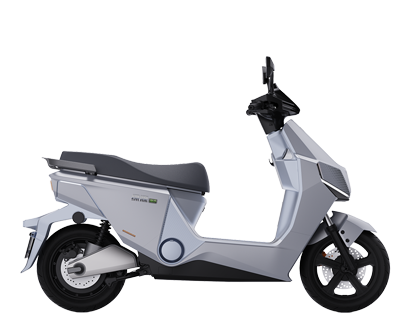
S90 Is a Useful Benchmark When the Brief Needs More Detail
A buyer may sometimes know the direction of the purchase without knowing how to describe the requirement in procurement language. In that situation, LUYUAN electric scooter S90 can serve as a useful reference model.
The important point is not to assume that the S90 must be the final selection. A reference model is more valuable when it helps the buyer explain what attracted their attention. Perhaps the overall positioning fits the intended customer, or perhaps the model raises questions about the type of configuration the market may expect.
We encourage buyers to use the product page in this way: identify the characteristics that seem relevant, then separate those that are essential from those that are simply interesting. That distinction turns “We want something like this” into a clearer product discussion.
It also gives an e-scooter supplier something concrete to respond to. The conversation can move toward the buyer's actual requirements instead of staying at the level of a general request for recommendations.
Five Questions Can Make the Supplier's Reply Much More Useful
A useful inquiry does not need to become a long technical document. A few well-chosen details can change the quality of the reply considerably.
The first is the intended use. State whether the scooters are aimed at commuting, delivery, leisure, commercial operations, or another specific scenario. Then describe the riding environment closely enough for the supplier to understand what the vehicle will be expected to handle.
The second is the customer profile. A distributor selling to regular urban riders may approach product selection differently from a company supplying vehicles to a fleet. Even a short description of the target customer can remove a great deal of ambiguity.
The third is the model reference. If LUYUAN electric scooter S90 has caught your attention, name it and explain what made it relevant. That gives the supplier a starting point for comparison rather than forcing the conversation back to the entire range.
The fourth is the difference between requirements and preferences. Mark the things that could rule out a model separately from features that would simply be nice to have. This makes later comparisons much easier.
The fifth is the information you need before moving forward. Product configuration, order conditions, compliance requirements, packaging, lead time, and other commercial details can then be discussed in the right context.
The resulting inquiry may still be short. The difference is that every question has a clear reason for being there.
Price Comes After the Product Brief
A price request is much easier to interpret when the product behind the number has already been defined. Otherwise, two quotations may look comparable while actually referring to different models, configurations, or purchasing assumptions.
That is why we would rather see a buyer identify the product direction first and discuss the commercial side second. Once the intended model and use case are clear, an electric scooter wholesale supplier can respond to a much more concrete request. The buyer can then judge the quotation against the same requirements instead of trying to work backwards from a price.
This is especially important when several models remain under consideration. A supplier's explanation of the differences can help the buyer decide whether those differences matter to the target market or merely add complexity to the purchase.
In other words, the first quotation should answer a defined sourcing question. It should not be expected to define the sourcing question for the buyer.
Take the Finished Brief Into the Partnership Conversation
By the time the initial inquiry is ready to send, the buyer should be able to explain four things without opening another catalog: who the scooter is for, where it will be used, which models are worth discussing, and what information is needed to make a purchasing decision.
That gives the next conversation somewhere to go. Instead of returning to broad questions about the entire product range, both sides can work from the same starting point and discuss the details that actually affect the proposed order.
For us, this is where product exploration becomes a genuine B2B conversation. A buyer who has already clarified the model, scenario, and purchasing priorities is in a much better position to discuss cooperation, rather than using the first inquiry simply to collect catalogs and prices.
Once that brief is ready, the natural next step is to move from product questions into the partnership discussion through the official partnership channel.




Press: media@luyuan.cn
Telephone: +86-579-82272946
Business: market@luyuan.cn
Telephone: +86-579-82272528
Service: service@luyuangroup.com
Select your country or region
Global
Asia

中文