

S95
M05
S90 (EEC)
MQN8
MKK
S75
S70 Pro (EEC,EMARK)
S70 (EEC)
ZQQ2 (EEC)
DM 01
G01
EB-S1E (EEC)
EB-S1 (CE)
EB-S2 (CE)
EB-2M (CE)
EB-2C (CE)
FB-03 (EN15194)
EB-1M (CE)
KS 01 (EN17128)







Popular searches:
EB-S1
S90
MNK6
EB-S1E
Urban, Long-Range or Rough-Road: How LUYUAN Organizes Electric Scooter Choices


Sep 07,2026
A distributor deciding which electric scooters to stock is rarely choosing between three interchangeable products. Urban commuting, longer-distance riding, and rough-road travel impose different demands, so the useful question is not “Which model is best?” but “Which model belongs to which riding scenario?” We use that scenario-first logic because it gives B2B buyers a clearer way to organize a portfolio and explain choices to customers.

A city route asks for a different kind of scooter
Urban riding usually rewards a balanced configuration rather than maximum capability. Short trips, frequent starts, paved roads, traffic, parking, and repeated daily use make controllability and practical comfort more relevant than simply adding power or battery capacity.
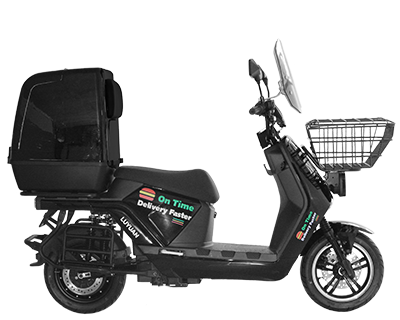
For an e-scooter supplier, an urban range should be organized around the rhythm of the route. A commuter may need a straightforward everyday vehicle, while a delivery operator can require a different setup because repeated stops, cargo, and longer operating hours change the duty cycle.
The catalog should therefore avoid putting every scooter into one broad category. A buyer should recognize whether a model is intended for city movement, longer travel, or terrain where road conditions become part of the engineering problem.
Long-range riding changes what “fit” means
Distance creates a different selection question. A longer route does not automatically require the largest battery available; the useful configuration depends on route length, stops, rider load, terrain, speed, and access to charging.
Battery information should be read together with the operating cycle. A B2B buyer building a long-distance product line can ask how the electrical system is managed during sustained use and whether the configuration matches typical routes. Our technology portfolio includes digital battery systems alongside motor and riding-control technologies, reflecting the need to manage the vehicle as an integrated system.
This also prevents a common catalog mistake: treating “long-range” as a universal quality ranking. More range is valuable when the route requires it. For a compact urban journey, additional capacity may not solve the customer's real problem.
Rough roads make the terrain part of the specification
Rough-road selection begins where a normal city-road assumption stops. Broken pavement, uneven surfaces, slopes, gravel, and mixed terrain place greater demands on control, braking, tires, suspension, and structural resilience.
Our S75 sits in the Standard section of the current electric-scooter portfolio and is presented as “All-Terrain Revolution.” The product comparison page lists S75-P and S75-Li variants, giving distributors a concrete model family to examine when their market contains customers with more demanding riding environments.
A rough urban street, a rural path, and a steep mixed-surface route can still produce different requirements. Our published all-terrain engineering discussion highlights traction control, hill-hold stability, anti-puncture tires, and ceramic composite brakes for terrain-oriented riding. Those details show why operating surface should influence classification before specifications are compared.
Give the S75 a defined job in the range
The LUYUAN electric scooter S75 becomes more useful in a catalog when its role is clearly defined. Instead of presenting it as just another model, a distributor can position it for riders who need a scooter for tougher surfaces, and compare it with urban models based on route conditions.
That makes the model easier to sell and support. Sales teams can begin with where the vehicle will operate, while service teams can anticipate which components deserve closer attention. Product positioning becomes connected to the operating environment rather than reduced to a list of numbers.
The current product structure separates performance, standard, and delivery scooters, while the wider range also includes electric bikes and kick scooters. For a regional distributor, that structure can be adapted by mapping each model to the dominant use scenario in its market.
Let the scenario map guide supplier selection
Once the scenarios are separated, supplier evaluation becomes more precise. A capable e-scooter supplier should be able to discuss model availability and how engineering, manufacturing, testing, and support correspond to different use conditions.
The same principle applies when evaluating an electric scooter manufacturer. A professional electric scooter manufacturer should connect production capability with the consistency required across a chosen product family. LUYUAN's manufacturing information describes automated motor production, automated frame processes, and quality-control practices, while the product structure shows how models are organized into distinct categories.
A scenario map can also improve inventory planning. A market dominated by paved commuter routes may need a different model mix from one where customers regularly encounter rough surfaces. Instead of stocking several models that overlap in purpose, distributors can assign each model a clear job.
Build the range around the customer’s road
The most useful product classification begins with the road the customer actually rides. Urban models should answer urban operating patterns; long-range models should address sustained-distance requirements; rough-road models should be selected where terrain places additional demands on the vehicle.
That is the logic we use to make product conversations more practical. Rather than leading with a generic supplier introduction, we can start with the operating scene and work backward toward the appropriate model category. For distributors, the result is a portfolio that is easier to explain, stock, and support.
Our LUYUAN electric scooter S75 is not simply another scooter in a crowded catalog; it can be evaluated when all-terrain use is part of the customer's requirement. The final decision should follow the road, duty cycle, and customer profile—not the length of a specification sheet.




Press: media@luyuan.cn
Telephone: +86-579-82272946
Business: market@luyuan.cn
Telephone: +86-579-82272528
Service: service@luyuangroup.com
Select your country or region
Global
Asia
中文