

S95
M05
S90 (EEC)
MQN8
MKK
S75
S70 Pro (EEC,EMARK)
S70 (EEC)
ZQQ2 (EEC)
DM 01
G01
EB-S1E (EEC)
EB-S1 (CE)
EB-S2 (CE)
EB-2M (CE)
EB-2C (CE)
FB-03 (EN15194)
EB-1M (CE)
KS 01 (EN17128)







Popular searches:
EB-S1
S90
MNK6
EB-S1E
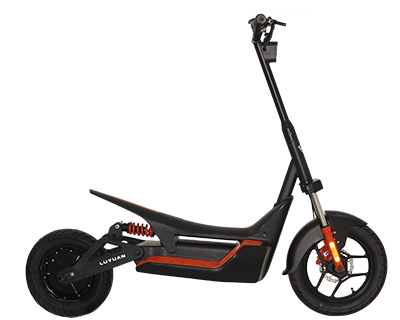
LUYUAN S70 for Routine Commuting: Turning Product Features into Real Use Questions


Sep 07,2026
When we evaluate an electric scooter for commuting, a specification sheet rarely answers the questions riders actually have. They want to know what happens on the morning route, in stop-and-go traffic, on a long incline, or after using the vehicle day after day. That is why we see the LUYUAN electric scooter S70 less as a collection of features and more as a set of answers to practical riding questions.

The S70 sits within our standard electric-scooter range, while the product family includes different configurations. Our published product information also identifies liquid-cooled motors as part of the wider technology platform.
What Does a Daily Commute Really Ask of an Electric Scooter?
A routine commute is deceptively demanding. A rider may travel a familiar route, but that route can combine frequent starts, intersections, uneven surfaces, inclines, waiting periods, and changing traffic conditions.
So the first question should not be, “How many features does the scooter have?” Instead, ask, “Which recurring problems do those features address?”
Motor behavior is one example. A commuter does not normally inspect motor architecture while riding. What they experience is whether power delivery feels appropriate for repeated starts and whether the vehicle remains predictable as the route changes.
Comfort deserves the same treatment. A seat, footboard, suspension and riding position only matter once they meet the rider's real commute.
How Should Motor Technology Be Judged on Ordinary Routes?
Motor technology matters most when the commute repeatedly asks the powertrain to work. Traffic lights create repeated acceleration cycles, while slopes increase the load placed on the motor.
Our liquid-cooling technology is therefore relevant not simply because “liquid-cooled” sounds advanced, but because thermal management is connected to how an electric powertrain handles heat. Our published technology information positions liquid-cooled motors as a core part of our engineering approach.
For someone considering the LUYUAN electric scooter S70, a better question is: “Does the motor technology match the conditions of my normal route?” A flat urban commute and a route containing sustained inclines place different demands on the powertrain.
That question also prevents a common mistake: treating a motor feature as a guarantee of a particular riding result. Actual performance depends on configuration and operating conditions, so buyers should evaluate the specific S70 version offered in their market rather than assuming every configuration is identical.
What Does the S70’s Riding Design Mean After Repeated Trips?
Commuting magnifies small ergonomic details. A feature that seems minor during a short demonstration can become much more noticeable after repeated journeys.
The S70's place within our product range means its suitability should be considered through the riding environment rather than through appearance alone. The broader S70 family is presented in our product comparison system with multiple configurations, reinforcing the need to distinguish between model versions when discussing equipment.
A useful buyer question is therefore: “What will I interact with every day?”
That includes the riding position, foot placement, controls, braking feel, suspension response, and visibility. Rather than describing these as isolated selling points, we would connect each one to a commuting situation. A comfortable contact point matters during repeated riding; predictable controls matter when traffic changes quickly; appropriate suspension matters when the route includes imperfect surfaces.
The result is a more useful product evaluation because the rider can imagine the S70 in the exact routine they expect to follow.
Which Battery Questions Matter More Than a Claimed Range?
Battery discussions often begin and end with range. For commuters, however, the more useful question is whether the charging routine fits the distance and schedule.
A rider should first estimate the regular journey, including the return trip, rather than choosing a vehicle from a headline number alone. Route conditions, riding behavior, load, temperature, and vehicle configuration can all affect real-world energy consumption.
The S70 comparison data shows multiple configurations, including P1, P2, and Li1 variants. That makes configuration identification particularly important when discussing battery expectations.
We would ask a prospective buyer: “Where will you charge the scooter, and how often do you realistically want to charge it?” That question can be more revealing than simply asking how large the battery is.
For a fleet buyer or electric scooter distributor, the same principle applies at a larger scale. Battery configuration affects how products should be positioned for different commuting scenarios, so sales teams need accurate version-specific information rather than one generalized specification.
How Should Distributors Translate Features into Buyer Conversations?
A distributor has a different challenge from an individual commuter. The distributor must turn engineering characteristics into questions that customers can understand without oversimplifying the technology.
By grounding our approach in practical applications, we shift sales conversations away from specs like motor architecture. Instead, we focus on whether customers regularly confront demanding scenarios like hills, frequent braking, or long commutes.
The same method works for comfort-related equipment. Rather than presenting a long list of components, a distributor can ask how far customers normally ride and what road surfaces they encounter.
This creates a more credible conversation because the feature is connected to a specific requirement. It also reduces the risk of making unsupported promises about range, durability, or performance.
For an electric scooter distributor, that distinction matters commercially. A product is easier to position when its engineering characteristics are mapped to identifiable customer needs. Our global business model includes dealer and distributor development, so connecting product engineering with local customer needs matters.
From Product Features to Everyday Decisions
Routine commuting does not require riders to become powertrain engineers. It does require them to ask better questions.
Our LUYUAN electric scooter S70 should therefore be evaluated through the situations that define the rider's normal day: repeated acceleration, road gradients, riding comfort, charging habits, and the exact vehicle configuration available.
For us, that is the more meaningful way to discuss an electric scooter. Engineering features have value when they answer recognizable problems. A liquid-cooled motor, for example, should be understood through thermal-management needs rather than treated as a marketing phrase. Likewise, battery information becomes useful when connected to a real charging routine.
That shift—from “What features does the scooter have?” to “What questions does each feature answer?”—gives commuters and distributors a clearer basis for evaluating whether the S70 fits its intended use.




Press: media@luyuan.cn
Telephone: +86-579-82272946
Business: market@luyuan.cn
Telephone: +86-579-82272528
Service: service@luyuangroup.com
Select your country or region
Global
Asia

中文