

S95
M05
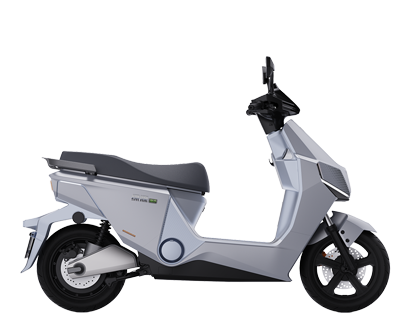
S90 (EEC)
MQN8
MKK
S75
S70 Pro (EEC,EMARK)
S70 (EEC)
ZQQ2 (EEC)
DM 01
G01
EB-S1E (EEC)
EB-S1 (CE)
EB-S2 (CE)
EB-2M (CE)
EB-2C (CE)
FB-03 (EN15194)
EB-1M (CE)
KS 01 (EN17128)







Popular searches:
EB-S1
S90
MNK6
EB-S1E
How to Read a Motor Technology Page Before Buying: LUYUAN Liquid Cooled Motor Example


Sep 07,2026
A motor technology page can look impressive while still leaving a buyer with the wrong question: “What does this technology sound like?” A better question is, “What engineering problem is it solving, and what evidence supports that claim?” When we present our motor technology, we want readers to follow that chain rather than stop at the phrase liquid-cooled motor.

That reading habit is useful for both individual buyers and B2B teams. It helps separate an engineering feature from a marketing headline and makes product comparisons much more meaningful.
Read the Page Like an Engineer, Not a Keyword List
Start by looking for four layers of information: the problem, the design response, the physical components involved, and the evidence used to support the result.
A technology page becomes more useful when those layers connect. “Better cooling” is a conclusion. A description of how heat is managed inside the motor gives the buyer something concrete to evaluate.
At LUYUAN, our technology materials position liquid cooling as part of its broader electric two-wheeler engineering strategy. The company describes an “All-in Liquid-Cooling” strategy and identifies liquid-cooled motors among its core technologies.
For a buyer, that context matters because it shows whether the technology is an isolated feature on one product or part of a manufacturer's wider engineering approach.
Find the Problem the Technology Is Supposed to Solve
Heat is the first technical clue worth following. Motor temperature can influence component durability and operating behavior, so a technology page discussing cooling should explain what happens when heat becomes difficult to manage.
Our patented cooling technology at LUYUAN is designed to reduce internal motor temperatures and prevent heat-related issues like demagnetization. While some test results highlight a temperature reduction of up to 38°C, other versions or operating contexts show more conservative figures. Therefore, these numbers should be understood as context-specific results rather than a universal standard for every vehicle.
That distinction is important. A careful reader should always ask: under what test conditions, for which motor generation, and on which product was the result measured?
Follow the Cooling Claim Into the Hardware
Next, move past the system name and inspect the components. LUYUAN's description of Liquid-cooled Motor 2.0 identifies a graphene-coated end shield, reinforced windings, increased lamination surface area, and automotive-grade insulation. These details give the reader a much clearer picture of what “motor technology” actually means.
A buyer does not need to become a motor designer to understand the significance of this information. The useful task is simply to connect each component to its stated engineering purpose.
The graphene-coated end shield, for example, is described as supporting heat transfer as well as water and corrosion resistance. The larger lamination surface is presented in relation to output efficiency, while automotive-grade insulation relates to system airtightness.
That is a better way to read a technology page: claim, component, function.
Connect Motor Technology to the Vehicle
Motor technology should never be evaluated completely separately from the vehicle carrying it. The S90 provides a useful example because the company's published history connects the model with both motor technology and battery-management development.
At LUYUAN, we report that the LUYUAN electric scooter S90 achieved a validated range of 121.3 km during a -20°C test in China's Changbai Mountains. The result is associated with the company's digital battery care system, so it should not be presented simply as the universal range of every S90 under every riding condition.
That qualification is exactly what a good technology-page reader should notice. A motor system can contribute to overall vehicle performance, but range is affected by much more than the motor alone.
The same principle applies to a smart scooter manufacturer evaluating its own technology communication. Buyers need enough system-level context to understand where a particular component fits and what the published test actually demonstrates.
Separate a Test Result From a General Promise
Numbers deserve special attention because they can make technical pages look more definitive than they really are.
Suppose a page reports a temperature reduction, efficiency figure, range result, or extreme-weather test. Do not immediately convert that number into an everyday guarantee. First identify the model, configuration, environmental conditions, test method, and whether the result represents a controlled demonstration or a typical operating value.
The S90's extreme-cold testing illustrates why this distinction matters. The company reports performance under specific conditions, including a -20°C environment. That is useful evidence for understanding the vehicle's tested capability, but it does not mean every rider will reproduce the same result in ordinary use.
Good technical reading therefore makes claims narrower, not broader.
Use the Same Reading Method for Supplier Evaluation
B2B buyers can apply the method at a larger scale. When evaluating a smart scooter manufacturer, examine whether the technology page is supported by identifiable hardware, product examples, testing information, and a broader engineering system.
A supplier conversation can then move beyond “Does this scooter have liquid cooling?” More useful questions include: Which motor generation is fitted? Which models use it? What conditions produced the published result? Which components were redesigned? How is the technology validated during production?
That approach also makes supplier comparisons fairer. One manufacturer may emphasize a temperature figure, while another describes motor construction in greater detail. Looking at the evidence chain prevents a single impressive number from becoming the entire purchasing decision.
We design our technology pages at LUYUAN to provide everything buyers need to trace the engineering behind every statement. It is less about learning definitions and more about seeing the bigger picture: why the manufacturer adopted the solution, how it is built, where the proof originates, and what conclusions hold true. Following this thread turns what could be a dense list of marketing terms into a clear blueprint for your choices.




Press: media@luyuan.cn
Telephone: +86-579-82272946
Business: market@luyuan.cn
Telephone: +86-579-82272528
Service: service@luyuangroup.com
Select your country or region
Global
Asia

中文