

S95
M05
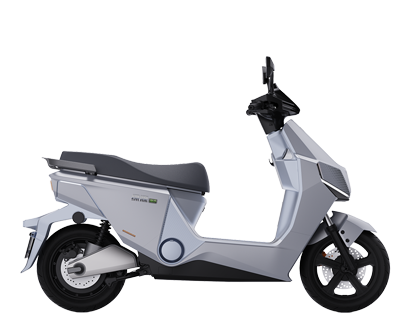
S90 (EEC)
MQN8
MKK
S75
S70 Pro (EEC,EMARK)
S70 (EEC)
ZQQ2 (EEC)
DM 01
G01
EB-S1E (EEC)
EB-S1 (CE)
EB-S2 (CE)
EB-2M (CE)
EB-2C (CE)
FB-03 (EN15194)
EB-1M (CE)
KS 01 (EN17128)







Popular searches:
EB-S1
S90
MNK6
EB-S1E
Charging Habits and Longer Rides: Questions LUYUAN S90 Shoppers Should Ask


Sep 06,2026
A longer ride changes the way we look at charging. During a short commute, riders may simply return home and plug in the scooter. A longer journey creates more decisions: how much energy is available, whether charging needs to be planned into the route, what conditions are suitable for charging, and whether the charging routine remains convenient after months of use.

That is why we would approach the LUYUAN electric scooter S90 with questions rather than a single expectation about charging time. The manufacturer's published information provides useful insight into battery management and power monitoring, but the most important issue for a long-distance rider is whether those technologies support a practical charging habit.
Going Farther Starts With a Charging Routine
Long-distance riding does not necessarily mean the rider needs to recharge during every journey. What matters first is understanding the relationship between the expected route and the scooter's available energy.
A rider who travels a familiar long route can develop a predictable routine. Charging may happen before departure, after returning, or during a planned break. Someone covering less predictable distances may need greater flexibility and clearer battery information.
We therefore suggest that S90 shoppers begin with their own riding pattern. How far is a normal “long ride”? Is the route fixed or variable? Will the scooter usually be parked somewhere that permits convenient charging? These questions establish the real meaning of charging convenience.
The S90 comes in different configurations. Buyers should confirm the exact model and battery setup for their market, because charging can vary by version. The manufacturer's product information should be treated as the reference point for that specific configuration.
For professional buyers, the same logic applies at a larger scale. An electric scooter wholesaler needs to understand not only what the vehicle can do, but also what charging habits its target customers are likely to develop.
A Long Ride Is Easier When the Battery Is Easy to Read
Long-distance riding creates a simple problem: the rider needs to make decisions before the battery becomes a problem. That makes the quality of battery-state information surprisingly important.
The S90 uses an SOC-accurate power display with at least 95% accuracy and a real-time power bar display.
For us, the value of this information is not the number itself. It is the decision it supports. A rider can check the available energy and decide whether to continue, change the route, or incorporate charging into the journey.
That becomes particularly useful when a long ride contains several different sections. An open road, an uphill section, slower urban traffic, and frequent acceleration can place different demands on the battery. Battery information gives the rider a reference point while those conditions change.
Anyone comparing the fast charging electric scooter market should therefore ask a broader question than “How quickly can it charge?” A useful charging system begins before the charger is connected: the rider needs enough information to know when charging is actually necessary.
What Should Happen Before You Plug the S90 In?
Charging convenience also depends on what happens immediately before charging. A rider finishing a long journey may have used the scooter under conditions that are very different from those experienced during a short local trip.
Temperature management is consequently worth understanding. The battery system includes intelligent temperature management and adjusts charging mode based on ambient temperature.
That is part of the S90's smart battery management, rather than a blanket promise about charging performance. Given that environmental conditions vary, always follow the recommended charging protocols for your specific model.
This is also why charging habits should be treated as part of ownership rather than an afterthought. A sensible routine includes checking the vehicle's condition, using the appropriate charging equipment, and paying attention to unusual behavior instead of treating every charging session as exactly the same.
A Convenient Charge Is About More Than Charging Speed
Charging speed naturally attracts attention, particularly among riders who do not want charging to interrupt a longer journey. Yet we would avoid defining convenience purely through a promised number of minutes.
A fast charging electric scooter can be convenient, but actual usefulness depends on when and where the rider charges. A rider who can charge at home for hours has very different needs from one who has to fit a short charge into a workday.
The better question is whether the charging process matches the rider's schedule. Can the scooter be charged at the locations normally available to the rider? Does the battery information make it clear when charging should be planned? Are the manufacturer's charging instructions easy to follow?
For an electric scooter wholesaler, communicating that distinction can also help dealers set realistic expectations. Customers need practical charging guidance, not simply a headline feature.
Ask How the Charging Routine Will Work Months From Now
A charging decision should survive beyond the first few weeks of ownership. Long-distance riders eventually establish habits based on where they park, how often they travel, and how they monitor battery status. The manufacturer's support structure can become increasingly relevant as those habits develop.
That matters for B2B buyers because charging questions do not necessarily end when a scooter is delivered. Dealers and distribution partners may need to explain battery-management features, charging practices, and model-specific information to customers.
Therefore, it is wise to inquire about a supplier's post-purchase technical backup and the clarity of their charging guidelines. Ultimately, the quality of these responses determines how comfortably an electric scooter wholesaler can introduce a new model to a fresh market.
Individual shoppers can apply the same principle. Before choosing the LUYUAN electric scooter S90, confirm the exact battery configuration, charging equipment, recommended charging practices, and available support for the version being purchased.
Longer rides ultimately make charging a planning issue, not simply a specification issue. The S90 should be judged by whether its battery information, charging management, and ownership routine fit the rider's actual journey. We would give particular attention to how easily the rider can understand remaining energy and incorporate charging into normal stops.
For shoppers and an electric scooter wholesaler, the most useful questions are therefore practical ones: How will I charge it? When will I know that I should charge it? What happens when conditions change? And who can help if questions arise later? Those answers provide a much stronger basis for evaluating the S90 than a single charging-time claim.




Press: media@luyuan.cn
Telephone: +86-579-82272946
Business: market@luyuan.cn
Telephone: +86-579-82272528
Service: service@luyuangroup.com
Select your country or region
Global
Asia

中文