

S95
M05
S90 (EEC)
MQN8
MKK
S75
S70 Pro (EEC,EMARK)
S70 (EEC)
ZQQ2 (EEC)
DM 01
G01
EB-S1E (EEC)
EB-S1 (CE)
EB-S2 (CE)
EB-2M (CE)
EB-2C (CE)
FB-03 (EN15194)
EB-1M (CE)
KS 01 (EN17128)







Popular searches:
EB-S1
S90
MNK6
EB-S1E
What Makes a Product Range Easier for Dealers to Sell? A LUYUAN Perspective


Sep 06,2026
A dealer does not really sell a product catalog. A dealer sells a solution to a customer standing in front of the showroom, comparing options and trying to decide which scooter makes sense for their needs. That is why a strong product range should make it easier to match customers with the right scooter, not just add more models. For an e-scooter supplier, the real question is whether its range gives dealers enough relevant choices to have useful conversations with different buyers.

Selling Gets Simpler When the Range Mirrors Customer Choices
Customer demand rarely arrives in one standard form. Even in the same market, buyers differ in how they use a scooter, what type they prefer, and what matters most in their decision.
A dealer therefore benefits when the product range reflects meaningful differences between customers. Instead of trying to persuade every visitor toward the same vehicle, sales staff can first understand the customer's situation and then identify a more relevant option within the range.
That changes the showroom conversation. The salesperson is no longer explaining why one particular scooter should work for everyone. The conversation becomes a process of matching customer requirements with available choices.
For a smart scooter manufacturer, this distinction matters because product development and product presentation ultimately meet at the same point: the customer decision. A range that is easier to navigate gives dealers a more practical foundation for that decision.
A Dealer Needs Coverage, Not a Collection of Models
More models do not automatically create a better range. If several products address essentially the same customer requirement, the additional choices may add complexity without creating meaningful sales opportunities.
Useful coverage works differently. Each relevant model should have a recognizable place within the dealer's customer conversations. A buyer with one set of expectations should be able to find a suitable direction, while another buyer with different priorities should have another option worth considering.
That is why we look at a product range from the perspective of customer coverage. The dealer needs to know not only what each vehicle is, but also why a customer might choose it instead of another model in the same showroom.
The relationship between products becomes particularly valuable here. A dealer can introduce the brand through a range of choices, then narrow the discussion according to the buyer's needs. Such a structure can make training, product explanation, and showroom communication more coherent than presenting unrelated models individually.
Where the S95 Fits Into the Product-Range Logic
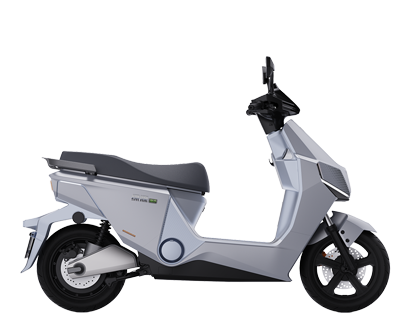
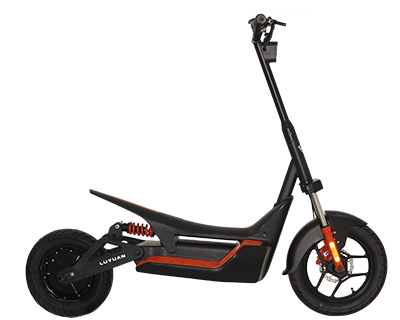
Our LUYUAN electric scooter S95 can be considered within this broader range logic rather than evaluated as an isolated product. For a dealer, the useful question is not simply whether the model attracts attention. The more practical question is where it belongs in conversations with local customers.
A dealer can begin by identifying the customer situations it expects to encounter and then determine whether the S95 gives the salesperson a relevant option for one of those situations. That approach keeps the model connected to an actual sales decision instead of turning product evaluation into a list of specifications.
The same reasoning can be applied across the wider range. Each model should have a reason to be presented and a customer context in which it makes sense. A prospective e-scooter supplier should therefore be evaluated partly on whether its product portfolio gives dealers this kind of structure.
The value of the S95, from a range-management perspective, comes from its position within that larger selection. It can contribute to a portfolio when dealers can clearly distinguish its role from other products and connect that role to identifiable customer needs.
The Brand Becomes Easier to Explain Through the Range
A product range also shapes how customers understand the brand. If every model appears disconnected, the dealer has to explain the brand repeatedly from scratch. A coherent range gives the salesperson another option: introduce the brand through the different customer needs that its products are intended to address.
For us at LUYUAN, the connection between the brand and individual models can therefore be viewed in both directions. The brand provides an overall identity for the range, while individual scooters give customers something concrete to evaluate.
This relationship can also make a dealer's presentation more natural. A salesperson may start with the customer's requirements, introduce the relevant part of the range, and then focus on the model that best fits the conversation. The brand remains present without becoming a substitute for product-level explanation.
That logic matters for a smart scooter manufacturer, because product terminology alone does not help a dealer sell. Customers still need a clear reason to connect a particular product with their own requirements.
A Sellable Range Gives Dealers a Clearer Starting Point
A good range does not remove the need for skilled dealers. It gives those dealers a better starting structure.
The first question should be what customers are asking for. The second should be whether the range contains relevant choices. Only then does it make sense to determine how individual products should be presented, compared, and positioned in the showroom.
From an e-scooter supplier perspective, that means portfolio logic can be just as important as individual-model appeal. Dealers need enough differentiation to serve distinct customer requirements, while the overall range needs enough coherence to remain understandable.
Our S95 illustrates why individual models should be considered as parts of a larger customer-selection process. Its role is clearer when a dealer knows which customer conversations it can support and how it relates to the other choices available.
A product range becomes easier to sell when dealers do not have to invent the connection between products and customers themselves. A coherent portfolio gives them a clearer route from customer need to product choice. This is the core mindset we at LUYUAN bring to our collaborations—uniting us, our product range, and the dealers who present our vehicles to the market.




Press: media@luyuan.cn
Telephone: +86-579-82272946
Business: market@luyuan.cn
Telephone: +86-579-82272528
Service: service@luyuangroup.com
Select your country or region
Global
Asia

中文