

S95
M05
S90 (EEC)
MQN8
MKK
S75
S70 Pro (EEC,EMARK)
S70 (EEC)
ZQQ2 (EEC)
DM 01
G01
EB-S1E (EEC)
EB-S1 (CE)
EB-S2 (CE)
EB-2M (CE)
EB-2C (CE)
FB-03 (EN15194)
EB-1M (CE)
KS 01 (EN17128)







Popular searches:
EB-S1
S90
MNK6
EB-S1E
A Use-Case First Look at LUYUAN S70 Pro: Who Should Explore the Model Page?


Sep 05,2026
For a buyer, distributor, or mobility business, a model page is useful only when it answers a real operating question. At LUYUAN, we designed the LUYUAN electric scooter S70 Pro page around a practical starting point: which users have a reason to investigate this particular configuration?

The highest configuration lists a 70 km/h maximum speed, 2,000 W rated power, a 76 V 27 Ah LFP battery, and a stated 7–8 hour charging time. These figures are listed as S70 Pro-Li2 test results and should therefore be treated as configuration-specific rather than universal specifications.
Riders Whose Routes Demand More Than Basic Urban Mobility
Start with the route rather than the vehicle. A rider covering short, predictable city trips may not need every specification on a performance-oriented model page. The S70 Pro becomes more relevant for users expecting longer journeys, varied road conditions, or greater emphasis on sustained riding comfort.
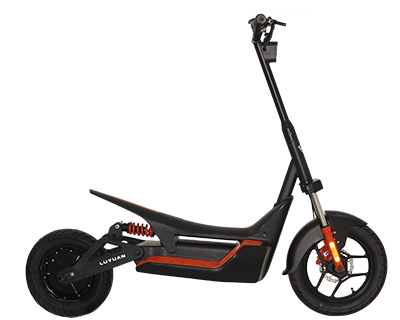
The page highlights a comfort seat, oversized footboard, rear backrest, and hydraulic suspension. Those details point toward a use case where time on the vehicle matters, rather than a quick trip where comfort features have less influence.
For someone researching a long distance electric scooter, the page provides a practical checkpoint: is the vehicle's physical design appropriate for the way it will actually be ridden? Route length, road conditions, rider expectations, and configuration all matter.
Riders Comparing Power With Thermal Management
Power figures become more meaningful when the operating environment is considered. The highest configuration uses a 2,000 W liquid-cooled motor and reaches a stated maximum speed of 70 km/h. Liquid-cooled Motor 2.0 uses a graphene-coated end shield, reinforced windings, increased lamination surface area, and automotive-grade insulation.
The page therefore suits buyers asking how the motor system manages heat and durability under demanding use. Liquid cooling becomes part of the engineering story, not an isolated specification.
Users investigating a long distance electric scooter can also look beyond the motor. Battery configuration, charging requirements, seating, suspension, tires, and brakes influence whether a specification fits a planned route. The page lists LFMP options for the S70 Pro-Li1 and S70 Pro-Li2 variants, while Li2 carries the 74 V 30 Ah configuration referenced in the top performance figures.
B2B Buyers Who Need to Judge a Model Before a Partnership
The audience is not limited to individual riders. A business evaluating an electric scooter supplier needs to decide whether a model has a credible place in its market before moving into deeper commercial discussions.
For that buyer, the page works as a product-definition document. It presents S70 Pro-P, S70 Pro-Li1, and S70 Pro-Li2, with differences in motor output, maximum speed, and battery configuration.
That distinction shapes the next questions: which version matches local roads, which battery chemistry suits the market, and whether customers value output, comfort, or a particular electrical configuration. Procurement should answer these points before price becomes the only comparison.
Fleet and regional mobility operators can use the page to identify a configuration for further validation, then discuss quantities, service arrangements, market requirements, and commercial terms separately.
Users Who Need to Inspect the Details, Not Just the Headline
A model page earns attention when a headline cannot answer a specific question, such as one about suspension, tires, braking, controller protection, or motor construction.
The page states that the controller uses an integrated curing package and is rated IP67 for dust and water protection. It also describes a graphene steel wire tubeless tire with a self-sealing layer and lists front and rear disc brakes for the configurations shown. Such details matter most when engineering architecture drives the decision.
Simultaneously, this information serves a key B2B purpose by setting the stage for technical alignment with dealers and clients. By reviewing the model, suppliers can quickly spot which specs call for real-world validation and which features require dedicated emphasis during sales pitches.
Who Can Skip the Page—and Who Should Not?
Not every visitor needs a deep review. A basic commuter may find a simpler model more suitable, while buyers without higher-output, comfort, or configuration needs have less reason to study this page.
The stronger case belongs to users with a defined scenario. Longer-trip riders should examine battery and charging configuration; users facing varied roads should inspect suspension, tires, braking, and motor details; distributors should study variants before adding the model to a portfolio.
We suggest treating the page as a decision checkpoint, not a catalog entry. Matching specifications justify deeper technical or commercial discussion; a mismatch suggests starting with another model.
The Model Page Is a Filter, Not Just a Product Showcase
The strongest reason to explore the S70 Pro page is not curiosity about another scooter. It is the need to match a defined riding or business scenario with a specific vehicle configuration. The page gives prospective users technical detail to decide whether further evaluation is worthwhile.
Beyond maximum speed, riders today prioritize elements such as ride comfort, powertrain layout, battery configuration, and braking efficiency. For any electric scooter supplier, analyzing these specific variants and features is a crucial first step to verify market fit prior to partnership discussions.
At LUYUAN, we built the S70 Pro page to serve as a practical resource for buyers who wish to test their specific use cases against real product details. By doing so, we make the browsing experience more meaningful and ground every purchase or partnership choice in genuine, practical requirements.




Press: media@luyuan.cn
Telephone: +86-579-82272946
Business: market@luyuan.cn
Telephone: +86-579-82272528
Service: service@luyuangroup.com
Select your country or region
Global
Asia

中文