

S95
M05
S90 (EEC)
MQN8
MKK
S75
S70 Pro (EEC,EMARK)
S70 (EEC)
ZQQ2 (EEC)
DM 01
G01
EB-S1E (EEC)
EB-S1 (CE)
EB-S2 (CE)
EB-2M (CE)
EB-2C (CE)
FB-03 (EN15194)
EB-1M (CE)
KS 01 (EN17128)







Popular searches:
EB-S1
S90
MNK6
EB-S1E
A Service-Team View of Motor Heat: Reading LUYUAN Liquid Cooled Motor Technology


Sep 04,2026
Motor heat is not simply a specification-sheet topic. For a service team, it can become part of the conversation when riders describe how a vehicle behaves after sustained use, under particular road conditions, or during repeated operation. That does not mean every temperature-related observation indicates a fault. It means technicians need a clear way to understand the motor's thermal-management design and explain it without making assumptions.

Our starting point is therefore practical: what does the cooling system mean from the service side, and what should technicians look for before drawing conclusions? At LUYUAN, our liquid-cooling technology provides the technical context, while actual service decisions still depend on the specific vehicle, operating conditions, and verified product information.
What Does Motor Heat Tell a Service Team?
Heat is a natural part of motor operation. Electrical energy is converted into mechanical output, and some energy is dissipated as heat along the way. A service technician therefore should not treat the simple presence of heat as evidence of abnormal operation.
Context matters more. A rider may describe a vehicle after a long period of operation, repeated acceleration, heavy traffic, frequent stops, or another demanding riding pattern. Each situation can change how the motor is being used.
That is why a service conversation should begin with questions rather than conclusions. How was the vehicle being ridden? How long had it been operating? What route conditions were involved? Did the rider notice a new behavior or simply become aware of normal heat?
Understanding the role of a liquid-cooled motor gives technicians another part of that conversation. The cooling system is designed as part of the motor's thermal-management architecture, so its presence should be understood alongside the operating conditions rather than presented as a guarantee of a particular service result.
Which Riding Conditions Deserve Attention?
A service team's observations become more useful when they are connected to actual usage. Two riders may use the same electric two-wheeler differently: one travels short urban distances with frequent interruptions, while another spends longer periods under sustained operating conditions.
Those differences can influence the thermal environment around the motor. Route characteristics, riding duration, load conditions, ambient conditions, and operating patterns are all useful pieces of background when a customer reports a concern.
No single observation should automatically lead to a diagnosis. Technicians can first establish what happened before deciding which part of the vehicle requires closer inspection.
For electric scooter manufacturers in China, this service-oriented perspective also matters when products are introduced to different markets. Vehicles may encounter different climates, routes, usage habits, and service practices. Clear technical documentation becomes especially valuable when local teams need to interpret customer feedback consistently.
Where Does Liquid Cooling Fit Into the Diagnosis?
A liquid-cooled motor uses a liquid-based cooling approach as part of its thermal-management design. From a service perspective, the key is to understand how the system integrates with the overall motor architecture. It should not be reduced to a simple claim that the motor will “run cooler.”
That distinction keeps technical communication accurate. Cooling technology addresses heat management, but it does not eliminate the need to understand how a vehicle is operated or how its systems are designed and serviced.
Technicians should therefore know which cooling-system information is documented for the relevant model. Service procedures, inspection requirements, system components, and any specified maintenance instructions should come from the applicable technical documentation.
What Should Technicians Verify on the Vehicle?
Good service work begins with the correct vehicle information. Model, configuration, system design, and applicable documentation should be established before a technician interprets a customer's description.
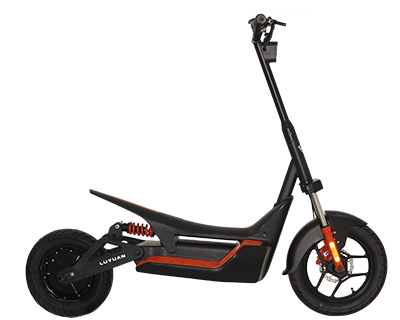
That principle becomes particularly relevant when discussing the LUYUAN electric scooter S95. Product information should be checked against the exact model and configuration rather than transferring assumptions from another vehicle.
A technician can then separate three categories of information: what the customer observed, what can be verified through inspection, and what the manufacturer's documentation says about the system.
This separation makes the service conversation more precise. It also prevents an understandable customer concern about motor heat from immediately becoming a claim about failure, insufficient cooling, or guaranteed performance.
For electric scooter manufacturers in China, the same discipline supports communication between product teams, distributors, and service personnel. Consistent terminology helps different teams discuss thermal-management systems without adding unsupported conclusions.
How Should the S95 Be Discussed With Customers?
Customer communication is often where technical knowledge becomes most valuable. Riders may not distinguish between normal operating heat, a change in behavior, and a confirmed mechanical or electrical issue.
The service team's role is not to promise an outcome before the vehicle has been assessed. Instead, technicians can explain what the cooling system is intended to do, ask about the circumstances surrounding the observation, and follow the relevant inspection procedure.
For our LUYUAN electric scooter S95, that means keeping product-specific statements tied to verified information. If a customer asks how its thermal-management system works, the answer should come from the applicable product and service documentation.
A clear explanation can be more useful than a broad performance claim. Customers need to understand what has been observed, what has been checked, and what remains to be confirmed.
Keep Heat Management in the Service Conversation
Motor heat becomes easier to discuss when technicians treat it as a diagnostic context rather than an isolated number. Operating conditions provide the background, cooling architecture explains part of the engineering approach, and inspection determines what can actually be concluded.
That is where liquid-cooling technology deserves attention. It gives service teams a defined thermal-management system to understand, but it should not become a shortcut for promising a particular maintenance outcome.
From our perspective, the most responsible approach is straightforward: understand the design, gather the rider's operating context, verify the applicable vehicle information, and communicate only what the evidence supports. For service teams working with modern electric two-wheelers, that keeps our technology at LUYUAN grounded in the practical questions customers bring to the workshop.




Press: media@luyuan.cn
Telephone: +86-579-82272946
Business: market@luyuan.cn
Telephone: +86-579-82272528
Service: service@luyuangroup.com
Select your country or region
Global
Asia

中文