

S95
M05
S90 (EEC)
MQN8
MKK
S75
S70 Pro (EEC,EMARK)
S70 (EEC)
ZQQ2 (EEC)
DM 01
G01
EB-S1E (EEC)
EB-S1 (CE)
EB-S2 (CE)
EB-2M (CE)
EB-2C (CE)
FB-03 (EN15194)
EB-1M (CE)
KS 01 (EN17128)







Popular searches:
EB-S1
S90
MNK6
EB-S1E
One Brand, Different Riding Needs: Mapping the LUYUAN Electric Scooter Lineup


Sep 03,2026
A broad electric scooter lineup can create a strange problem: more choice does not always make selection easier. Someone looking for an everyday vehicle may have little reason to begin with a performance-focused model, while a rider seeking stronger performance could overlook relevant options by browsing only through general-purpose products. Our range is therefore easier to understand when the starting point is the riding need rather than the model name.

The current electric scooter structure separates products into Performance, Standard and Delivery categories. Performance includes S95, S90, MQN7 and MKK, while Standard includes S75, S70 Pro, S70 and ZQQ2. DM 01 is listed separately under Delivery.
A Lineup Becomes Easier to Read Once the Riding Need Is Clear
The first useful question is not “Which scooter is best?” It is “What kind of riding am I trying to support?” That distinction changes the entire search.
A rider focused on performance has a different starting point from someone looking for a vehicle for recurring everyday journeys. A business preparing a local product assortment faces another decision altogether. Treating those three situations as if they required the same model would make the lineup harder to navigate.
Our product structure already provides a first layer of separation. Performance, Standard and Delivery are not simply three labels on a menu; they give visitors a way to reduce the number of models they need to investigate before opening individual product pages.
For an e-scooter supplier, this kind of structure can also make range planning more practical. Instead of starting with a long model list, a supplier can first consider which customer profiles matter in its market and then examine the corresponding section.
Individual riders can follow the same logic. Identify the riding pattern, choose the relevant category, and only then compare model-level details. That sequence turns a broad catalog into a shorter research path.
Performance-Focused Riders Can Narrow the Search to Four Models
A search becomes considerably more focused once performance is the primary requirement. Four models currently sit in our Performance category: S95, S90, MQN7 and MKK.
That does not mean every performance-oriented rider should automatically choose the same scooter. It means the initial search can stop expanding and start becoming comparative. Instead of checking every vehicle in the lineup, the reader has four models to examine more closely.
The LUYUAN electric scooter S90 provides one useful reference point within this group. Official information records a validated range of 121.3 km for the S90 at -20°C in China's Changbai Mountains in 2024, connected with our battery digital care system.
Such a result should be understood in its documented test context rather than treated as a universal riding-range guarantee. Conditions, configurations and riding habits can affect actual results. Its value for someone comparing the lineup is that it gives the S90 a specific piece of verified information worth investigating further.
The other Performance models then become comparison points rather than unrelated alternatives. A visitor can move from the category page into individual product information, looking at which model most closely matches the intended riding experience instead of trying to rank the entire lineup at once.
Standard Models Give Everyday Riders a Different Place to Start
Performance is only one way to enter the range. Riders whose main concern is regular personal mobility may find it more useful to begin with the Standard category, where S75, S70 Pro, S70 and ZQQ2 are currently listed.
The distinction matters because everyday riding does not automatically require the same product priorities as performance-oriented use. A rider may care more about the character of the vehicle, the type of journeys involved and which features are relevant to that routine.
An electric scooter distributor can apply the same thinking when evaluating a local assortment. Different customers do not necessarily arrive with identical expectations, so a useful range may need to cover more than one riding profile. The category structure gives distributors a way to identify those groups before deciding which individual models deserve further attention.
S75, S70 Pro, S70 and ZQQ2 therefore work as starting points within the Standard group, not as interchangeable names on a list. The next step is to open the relevant product pages and compare the information that actually matters to the intended rider.
That approach also prevents a common selection mistake: comparing every available model simply because every model is available. A smaller, need-based comparison is usually more useful than a complete catalog review.
Delivery and Distribution Needs Create Their Own Route Through the Range
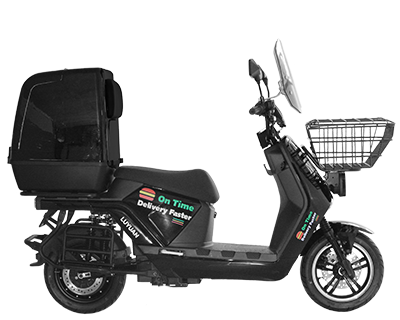
A commercial requirement changes the mapping exercise again. Delivery riding involves an operating purpose rather than simply an individual preference, which is why DM 01 has its own place in the Delivery category.
For businesses researching an e-scooter supplier, the product question may also be only the beginning. Local assortment, certification support, marketing resources, channel planning, training and after-sales service can all become part of the research process. Our dealer policy identifies these areas as elements of the support available to partners, while noting that specific policies depend on the country or region.
That makes the partner route different from an individual rider's browsing journey. A private customer may narrow the search from riding need to model. A commercial visitor may need to connect product selection with market requirements and the resources available around distribution.
Our LUYUAN electric scooter S90 illustrates why a mapped approach is useful even when one model has already attracted attention. Its Performance placement tells the reader where it sits within the range, while its dedicated information provides the next level of detail. Another visitor may instead arrive at S75, S70 Pro, MKK or DM 01 because the original requirement points elsewhere.
A well-mapped lineup should not force every visitor toward one answer. Its purpose is to make the next answer easier to find. Start with the riding need, move into the matching category, and then use individual product pages to confirm which model deserves closer attention.
For us, that is the practical role of the range: different riding needs should lead to different starting points. Once that relationship is clear, the lineup becomes less like a catalog to memorize and more like a map that tells each reader where to continue.




Press: media@luyuan.cn
Telephone: +86-579-82272946
Business: market@luyuan.cn
Telephone: +86-579-82272528
Service: service@luyuangroup.com
Select your country or region
Global
Asia

中文