

S95
M05
S90 (EEC)
MQN8
MKK
S75
S70 Pro (EEC,EMARK)
S70 (EEC)
ZQQ2 (EEC)
DM 01
G01
EB-S1E (EEC)
EB-S1 (CE)
EB-S2 (CE)
EB-2M (CE)
EB-2C (CE)
FB-03 (EN15194)
EB-1M (CE)
KS 01 (EN17128)







Popular searches:
EB-S1
S90
MNK6
EB-S1E
LUYUAN S70 for Busy Urban Routes: Building a Scooter Choice Around Daily Stops


Sep 02,2026
A city scooter is rarely used for one uninterrupted trip. A normal urban day can contain short departures: leaving home, stopping at a junction, parking near a shop, continuing to work, making another errand, and returning later. That repeated rhythm is the real context behind the S70. Instead of judging the model by a single journey, we can ask a practical question: does it fit the way a busy city route is actually lived?

For us, the S70 is best discussed through everyday stops. The aim is not to attach unsupported performance claims to the model, but to connect it with a recognizable urban use pattern and encourage buyers to verify the exact configuration on the official product page.
The S70 Question Starts at the First Stop
Consider a rider whose morning route contains several interruptions. A short ride to a main road may be followed by a traffic-light wait, a workplace entrance, and a parking maneuver. The afternoon can add several more stops before the rider heads home.
That changes the selection question. Total distance matters, but stop frequency, road layout, parking conditions, and the number of destinations can shape the experience just as strongly.
We would therefore introduce the S70 through the route itself. A buyer can mark every regular stop on a weekday route and use that map to check whether the model's verified equipment and configuration match the intended use.
Turn One Commute Into a Stop Map
A useful evaluation method is to divide one ordinary day into sections: departure, destinations, return legs, and the final trip home.
Each section creates another opportunity to assess route fit. A rider who frequently parks, turns into side streets, and makes short trips needs a vehicle that makes sense across the whole sequence.
The same thinking applies to a smart electric scooter. “Smart” should not be treated as a decorative label. For an urban buyer, technology is meaningful only when the vehicle's verified functions correspond to actual use.
Buyers can review the official model information, identify which listed functions matter for their routes, and compare them with the stops they have mapped.
Look at What Happens Between Destinations
Short urban routes can reveal details that disappear in a simple distance comparison. A rider may spend significant time entering and leaving destinations rather than travelling between them. Parking situations can also change throughout the day.
That is why we would not frame the S70 around one isolated specification. The more useful question is whether its documented configuration supports the rider's particular pattern of movement.
A commuter with three fixed destinations can ask where the scooter starts, where it stops, how long it remains parked, and what happens immediately after each stop.
Such questions turn a broad product search into a route-specific decision. They also give an electric scooter dealer a better way to explain the model without promising capabilities that have not been verified for a particular market or configuration.
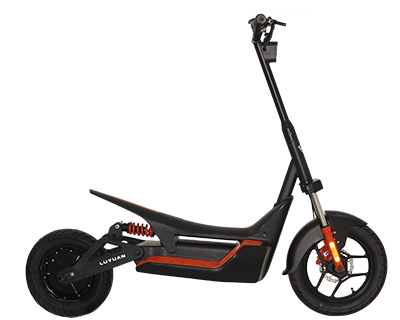
LUYUAN electric scooter S70 is most useful when it points to this selection task: matching a named model with a repeated urban routine.
Judge the S70 by the Week, Not One Ride
A scooter can seem suitable during one test ride and still be a poor match for a demanding weekday routine. Repeated departures, stops, parking locations, and return journeys make consistency central to route evaluation.
This is also where a smart electric scooter needs careful evaluation. Buyers should separate documented functions from assumptions and confirm which equipment belongs to the version available in their market. The official S70 page should remain the reference point for product-specific details.
For us, that discipline matters because urban mobility decisions are practical decisions. The right model is not necessarily the one with the longest list of features. It is the one whose verified characteristics make sense for the rider's repeated pattern of stops and destinations.
Give the S70 a Route-Based Sales Story
The same route-based logic can improve how an electric scooter dealer presents the model. A dealer can ask where customers ride, how many stops they make, and their regular destinations.
Those questions create a more relevant product conversation because the discussion begins with the customer's route.
For businesses considering partnership opportunities, the S70 can be positioned around identifiable urban use cases. A dealer can use official product information to confirm current specifications.
The LUYUAN electric scooter S70 becomes easier to explain when the route is visible. A customer can see why the model is being considered, what needs to be verified, and which parts of the daily journey matter most.
Let the Daily Stops Make the Decision
A busy urban route is not defined by its longest straight section. It is defined by everything that happens between destinations. Choosing the S70 should therefore begin with a realistic map of daily stops, followed by careful verification of the model's official configuration.
This approach helps riders move past vague shopping habits to make a genuinely practical choice, while giving dealers a straightforward, hype-free way to introduce the bike.
That is precisely how LUYUAN views the S70. It’s not meant to be a cure-all for every urban commute. Instead, it’s a machine you can measure against the daily grind of a stop-and-go route. Map out your actual commute, check the specs, and the right choice becomes pretty clear.




Press: media@luyuan.cn
Telephone: +86-579-82272946
Business: market@luyuan.cn
Telephone: +86-579-82272528
Service: service@luyuangroup.com
Select your country or region
Global
Asia

中文