

S95
M05
S90 (EEC)
MQN8
MKK
S75
S70 Pro (EEC,EMARK)
S70 (EEC)
ZQQ2 (EEC)
DM 01
G01
EB-S1E (EEC)
EB-S1 (CE)
EB-S2 (CE)
EB-2M (CE)
EB-2C (CE)
FB-03 (EN15194)
EB-1M (CE)
KS 01 (EN17128)







Popular searches:
EB-S1
S90
MNK6
EB-S1E
Heat on Repeated City Trips: What LUYUAN’s Liquid Cooled Motor Page Helps Explain


Sep 02,2026
City riding can look easy from the outside. A trip may last only a few kilometers, yet the vehicle can repeatedly accelerate, stop at intersections, climb short grades, and start again in traffic. Over a full day, those repeated changes can create a very different thermal workload from one uninterrupted ride.

We think this is where the discussion around motor cooling becomes practical. Instead of treating heat as a problem reserved for extreme riding, it is useful to understand what repeated urban operation does inside an electric powertrain and why thermal management deserves attention.
Repeated City Riding Creates a Different Heat Problem
A motor does not experience a city journey as a simple distance calculation. Traffic lights, congestion, acceleration, slopes, and frequent changes in speed can continually change the operating load.
Short trips can therefore be misleading. A rider might travel only several kilometers before stopping, but several similar trips throughout the day can create repeated periods of motor operation. Higher loads, particularly during acceleration or climbing, can increase heat generation inside the motor.
The issue becomes more relevant when riders expect consistent operation across repeated journeys. Heat is not automatically a sign that a motor is failing; electric motors naturally produce heat during operation. The engineering question is how effectively that heat can be managed.
Thermal management is a key part of our approach to motor durability. We developed liquid-cooling technology to help control internal motor temperatures under demanding operating conditions. The system also supports our broader focus on durability.
For an electric scooter manufacturer, this means motor design cannot be considered separately from the way people actually ride. Urban use creates a repeated pattern, and thermal behavior needs to be considered within that pattern rather than judged from a single test ride.
What Heat Does Inside an Electric Motor
Understanding the problem first makes the technology easier to understand.
Electrical energy entering a motor is converted into mechanical movement, but the conversion is not perfectly efficient. Some energy becomes heat. Under higher loads, the amount of heat generated can increase, making temperature control an important engineering task.
Excessive temperature can affect materials and components inside the motor. Our published technical information identifies heat-related risks including demagnetization and efficiency loss, which is why we focus on keeping internal temperatures under control.
That does not mean a rider should interpret every warm motor as a problem. Normal heat generation is part of electric motor operation. The more useful distinction is between ordinary operating heat and conditions in which accumulated heat becomes difficult to manage.
This is particularly relevant for vehicles that face repeated high-load situations. A steep road, heavier load, hot environment, or frequent acceleration can all change the thermal demands placed on the motor. Urban riding may combine several of these factors within one journey.
Consequently, cooling is not simply an accessory added after the motor has been designed. It can influence how engineers think about the motor's internal structure, insulation, heat transfer, sealing, and long-term durability.
How Liquid Cooling Changes the Thermal Equation
A liquid-cooled motor uses a cooling medium to transfer heat away from the motor rather than relying solely on surrounding air. The basic concept is straightforward: move heat from where it is generated toward a system that can dissipate it more effectively.
Our published technology information describes Liquid-cooled Motor 2.0 as using a graphene-coated end shield to improve heat transfer, together with reinforced windings, increased lamination surface area, and automotive-grade insulation. The same technical description also identifies improvements in water and corrosion resistance.
Those details help explain why liquid cooling should not be viewed merely as “adding coolant.” Thermal management involves several connected engineering decisions. Heat must be transferred, surrounding components need appropriate protection, and the motor has to remain suitable for its operating environment.
We have also published figures describing substantial temperature reduction from our liquid-cooling technology. Our system can reduce motor temperatures by up to 38°C under the stated test conditions. Actual results may vary depending on operating conditions and test methodology.
For an electric scooter manufacturer, the value of liquid cooling therefore goes beyond a headline temperature number. The underlying objective is to manage heat before it becomes a factor that compromises the motor's intended operating characteristics.
Why the S95 Makes the Technology Easier to Understand
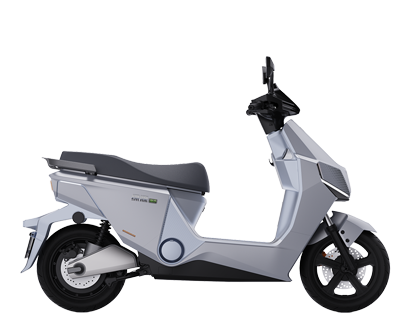
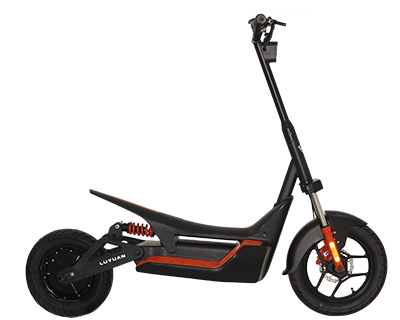
The LUYUAN electric scooter S95 provides a useful example of how LUYUAN combines high-power motor technology with liquid cooling. The system is designed to manage motor heat under demanding riding conditions, supporting consistent performance and long-term durability.
Those figures should not be read as proof that cooling alone determines performance. Motor power, controller behavior, battery capability, chassis design, tires, braking, and rider conditions all contribute to the final riding experience.
What the S95 example does show is why thermal management becomes more meaningful as power demands rise. A motor capable of delivering substantial output has to deal with the heat associated with that operating envelope. Liquid cooling becomes part of the engineering response rather than a marketing term detached from the powertrain.
Our technology roadmap prioritizes overall durability over isolated cooling features. We view liquid-cooled electric vehicles as a major direction, integrating the liquid-cooled power system with advanced battery health and safety solutions.
In practical terms, this matters for frequent city commuters. Repeated urban travel builds up sustained thermal demand, especially when compounding factors like acceleration, inclines, loads, and high temperatures come into play.
At LUYUAN, we explain the liquid-cooled motor through the exact problem it tackles: powertrain heat management. Once customers grasp this link, they can easily evaluate the technology's true worth. Instead of just asking if a scooter has a liquid-cooled motor, they examine how the thermal design matches the motor's intended engineering and operating environment.




Press: media@luyuan.cn
Telephone: +86-579-82272946
Business: market@luyuan.cn
Telephone: +86-579-82272528
Service: service@luyuangroup.com
Select your country or region
Global
Asia

中文