

S95
M05
S90 (EEC)
MQN8
MKK
S75
S70 Pro (EEC,EMARK)
S70 (EEC)
ZQQ2 (EEC)
DM 01
G01
EB-S1E (EEC)
EB-S1 (CE)
EB-S2 (CE)
EB-2M (CE)
EB-2C (CE)
FB-03 (EN15194)
EB-1M (CE)
KS 01 (EN17128)







Popular searches:
EB-S1
S90
MNK6
EB-S1E
Assortment Planning: How Dealers Can Navigate the LUYUAN Electric Scooter Range


Sep 01,2026
A dealer does not need the largest possible catalog to serve an electric two-wheeler market effectively. The harder task is deciding which models deserve showroom space, which customer needs they represent, and where two apparently similar products actually serve different buying situations.

Instead of beginning with vehicle inventory, our assortment planning starts with the rider. By prioritizing how people actually intend to use their bikes, we empower dealers to create product ranges that are intuitive to shop, easy to manage, and deeply responsive to local demand.
Build the Assortment From Customer Missions
The first question for an e-scooter supplier should not be “How many models can we offer?” It should be “Which riding missions do we need to cover?”
A daily commuter may prioritize a practical vehicle for routine transportation. Another customer may place greater emphasis on performance or a more distinctive riding experience. Commercial users can introduce another requirement entirely, particularly when vehicles are expected to operate frequently as part of a business.
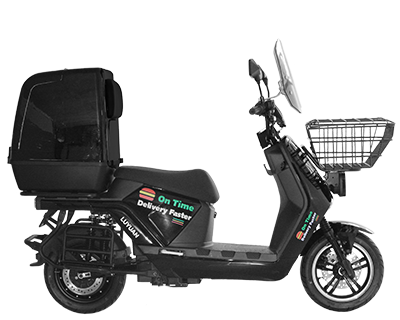
Our current product structure reflects this type of segmentation. The electric-scooter range is organized into Performance, Standard, and Delivery categories, giving dealers a starting point for separating different customer missions rather than treating every scooter as interchangeable.
That structure also changes how a showroom can be organized. Instead of displaying vehicles simply by model number, a dealer can guide customers toward a category first and then narrow the choice according to route, usage frequency, riding expectations, and local market conditions.
For a new electric scooter dealer, this approach can be particularly useful. A smaller, clearly differentiated assortment may be easier for sales staff to communicate than a large selection in which every product appears to compete for the same customer.
Separate the Core Commuter From the Specialist Buyer
Assortment depth becomes easier to manage once the main customer groups are separated.
A dealer serving predominantly urban commuters may need a strong core of standard-use vehicles rather than equal inventory across every category. A market with stronger demand for performance-oriented riding may justify greater representation from the Performance range. Commercial delivery activity can create a separate reason to carry models positioned for that operating environment.
Consequently, we treat these three categories as flexible foundations rather than rigid inventory mandates. Ultimately, the ideal mix is shaped by actual customer demand within each local market.
Local road conditions can also change the meaning of a category. A commuter in a dense city may have a different definition of everyday use from one travelling across less consistent roads. Likewise, a customer who occasionally encounters rough surfaces may need a different solution from a commercial operator facing repeated high-frequency use.
For an e-scooter supplier, the role is therefore broader than shipping a selection of models. Product categorization needs to give dealers a logical way to connect technical characteristics with customer requirements. That makes the assortment easier to sell without making unsupported promises about expected sales volumes.
Give the S75 a Clear Job in the Lineup
The LUYUAN electric scooter S75 has a specific place within the current structure: it appears in the Standard category, where the official product listing describes it as “Armored Evolution, All-Terrain Revolution.”
That positioning gives dealers a useful starting point when deciding where the model belongs in their showroom. Rather than presenting it as the universal answer for every rider, we can use it to represent customers whose requirements extend beyond a narrowly defined smooth-road commute.
The LUYUAN electric scooter S75 can consequently serve as a distinct reference point within a Standard-oriented assortment. A customer who describes a route containing changing road surfaces, for example, may have a different product conversation from someone whose entire journey consists of predictable urban pavement.
The distinction is important because assortment planning is partly about avoiding overlap. If several models are presented to the same customer for essentially the same reason, the dealer may create confusion instead of choice. A stronger range gives each product a recognizable role.
At the same time, dealers should not infer specifications, sales performance, or customer demand that have not been established. The S75's role should be explained through its documented product positioning and the needs of the local market, while actual inventory depth should be determined through dealer-level evidence.
Let the Market Decide How Deep the Range Should Go
Once the basic roles are established, the next decision is how much of the range a dealer should actually carry.
We would start with customer conversations. Which riding scenarios appear most often? Are buyers mainly seeking routine transportation, more performance-oriented riding, or vehicles for commercial use? Do local roads create a strong need for models designed around different operating conditions?
The answers can influence assortment depth without requiring the dealer to make unsupported forecasts. A market with one dominant customer mission may need a focused range. A more diverse market may justify broader representation across categories.
The same principle applies to variants. The official comparison system lists multiple configurations associated with several scooter models, including S75 variants such as S75-P and S75-Li. Dealers therefore have another layer of assortment to consider: whether a variant solves a meaningful local requirement or simply adds another choice to the shelf.
For an electric scooter dealer, this is where inventory discipline becomes part of customer experience. Every additional model or variant should have a reason to exist within the assortment. If the sales team cannot explain why a product is different from another vehicle already stocked, the distinction may not be useful to the customer.
Our dealer-support framework also recognizes that local markets require adaptation. We provide support covering localization, certification processes, marketing, channel planning, training, and after-sales, with specific policies varying by country and region.
That makes assortment planning an ongoing process rather than a one-time catalog decision. Customer feedback, road conditions, regulatory requirements, and the performance of individual product categories can all inform future adjustments.
A well-planned range is not the one containing the most vehicles. It is the one in which every stocked model has a clear customer purpose. Dealers can begin with the major use cases, map those needs against the available categories, and then add variants only when they solve a genuine market requirement.
That approach creates a more coherent path from showroom conversation to product selection—and gives the assortment room to evolve with the market rather than becoming a collection of overlapping models.




Press: media@luyuan.cn
Telephone: +86-579-82272946
Business: market@luyuan.cn
Telephone: +86-579-82272528
Service: service@luyuangroup.com
Select your country or region
Global
Asia
中文